

Nothing is Wasted: Davey and Kristi Blackburn
Murder. Abuse. Addiction. Abandonment. Davey and Kristi Blackburn have lived it—and lived to tell how Jesus met them in the wreckage. Their raw, sacred story proves that nothing—no trauma, no shame—is wasted. If you’re aching for healing or afraid to face the pain, this story is not just powerful. It’s personal.


Show Notes
- Find helpful resources along with Davey's book, Nothing Is Wasted: A True Story of Hope, Forgiveness, and Finding Purpose in Pain at nothingiswasted.com
- Find resources from this podcast at shop.familylife.com.
- See resources from our past podcasts.
- Find more content and resources on the FamilyLife's app!
- Help others find FamilyLife. Leave a review on Apple Podcast or Spotify.
- Check out all the FamilyLife's podcasts on the FamilyLife Podcast Network
Dear Listener,
As this year draws to a close, we’re thanking God for the many stories of families who found comfort, clarity, or renewed hope through the conversations you hear on FamilyLife. If these messages have encouraged your heart or helped your home hold more tightly to Jesus, we’re honored to have been part of your journey.
Looking ahead, many families are searching for the same reminders of God’s presence, whether in their marriages, parenting, or everyday walk of faith.
And right now, there is a generous $2 million matching gift, which means your year-end giving will be doubled, bringing gospel hope to twice as many families.
Would you prayerfully consider partnering with us to bless and uplift families as we enter a new year?
About the Guest
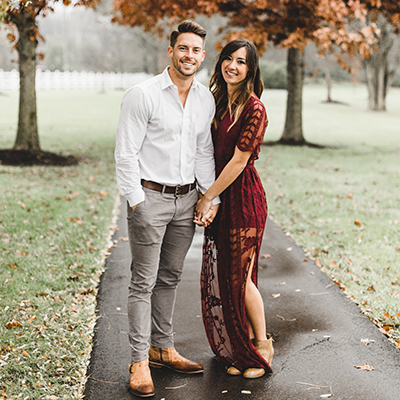
Davey and Kristi Blackburn
In November 2015 Davey’s wife of 7 years, Amanda Grace, was tragically murdered in a home invasion. Davey was left to pastor their church as a single dad of their 15 month old son, Weston.
Two years later Davey remarried and God’s redemption story began to unfold. Davey and his new wife, Kristi, have devoted their lives to helping people through their valleys in life and teach them that when following Jesus, nothing is wasted.
Davey and Kristi live in Indianapolis, IN with their three kids, Natalia, Weston, and Cohen. They founded Nothing is Wasted Ministries to help people partner with God to take back their story.
Episode Transcript
FamilyLife Today® with Dave and Ann Wilson; Podcast Transcript
This content has been generated by an artificial intelligence language model. While we strive for accuracy and quality, please note that the information provided will most likely not be entirely error-free or up-to-date. We recommend independently verifying the content with the originally-released audio. This transcript is provided for your personal use and general information purposes only. References to conferences, resources, or other special promotions may be obsolete. We do not assume any responsibility or liability for the use or interpretation of this content.
Nothing is Wasted
Guests:Davey and Kristi Blackburn
Release Date:November 18, 2025
Davey (00:00:00):
They come and tell me that she has three gunshot wounds. All of our family comes to the hospital. I put on Pandora radio station, the first song that came up was the song, Nothing is Wasted. Pandora’s randomized. You don’t get to choose what song. And we felt like Heaven touched Earth in that moment. We felt like we heard God say, “This is not going to turn out the way you want it to, but I’m not going to waste this.”
Dave (00:00:25):
Alright, so we’ve got Davey Blackburn, who I’ve sort of known you for years, and Kristi Blackburn with you; just met Kristi today for lunch, but I don’t know how we first met.
Davey (00:00:37):
I don’t know how we first met at all, but it had to have been through our mutual friend Clint Dupin of course.
Dave (00:00:42):
Yeah, and I’m sure Clint’s listening right now. Clint’s a FamilyLife Today—
Davey:
Probably listens to everything that you put out.
Ann (00:00:47):
I bet there’s nothing he misses.
Dave (00:00:48):
I doubt it, Clint. I doubt if you listen, but if you do buddy, I can still see your jump shot with your legs kicking me in the groin as you shoot three and laughing and missing the shot. Anyway, we played a lot of pickup basketball in my driveway. Clint is such a great guy.
Davey (00:01:06):
I can only imagine him playing pickup basketball.
Ann (00:01:08):
But it’s pretty unique that you guys, this is a second marriage for you guys, and you’re both pretty young, so we really want to capture your stories because man, they’re powerful and tearful and I bet some people will be able to relate to that.
Davey (00:01:24):
Yeah.
Dave (00:01:24):
So where do we start?
Davey (00:01:25):
Well, you’re right, Ann, because I’ll go and travel and speak at churches and I’m like, “Hey, so I’ve been married to my wife for eight years and we have a 12-year-old and 11-year-old.” And you always see the like “Huh?”
Kristi:
Questions, lots of questions.
Dave:
How did they let this guy in the ballroom?
Davey:
Now, wait a minute, there’s got to be a story here.
Dave:
He’s not allowed to speak at this church.
Davey:
I know. And if you were to summarize our story and really the ministry that we do now, it would be, “Hey, the story that you didn’t expect. Did your life go unexpectedly?” Which by the way, is all of us, Jesus said, “In this world, you will have trouble.”
Ann (00:01:53):
Well, even the title of your book, Nothing is Wasted:—
Davey (00:01:57):
Right.
Ann (00:01:57):
—A True Story of Hope, Forgiveness, and Finding Purpose in Pain. So if you’re listener, lock in, because all of us have walked through—
Dave (00:02:05):
Hey, by the way, what’s the cover art here?
Davey (00:02:07):
Okay, well, so let me share this. I’ll share the cover out there.
Dave (00:02:10):
You can look at it on YouTube. If you’re not watching us, you better start watching us because we’re so good looking. You want to see us. Well, one of us is.
Davey (00:02:18):
This cover art is representative of my late wife, Amanda. It’s actually in that, that is her sister Amber that is posing for that photo right there. But back in 2015, Amanda and I, we had one son, Weston, and we were pregnant with our second. We were church planters in Indianapolis. And I left to go to the gym early on a Tuesday morning. But while I was away at the gym, there were three men who were on a random crime spree through Indianapolis, and they broke into the home three doors down from me, saw me leave for the gym that morning.
Dave (00:02:52):
They saw you leave.
Davey (00:02:54):
They had pulled a stolen car into the garage. Through their crime spree they stole a car and they pulled it into this garage because nobody was home at the home that they were breaking into.
Ann (00:03:04):
Three doors down?
Davey (00:03:05):
Three doors down, loading up stolen goods, and happened to see me drive by.
Kristi (00:03:08):
Well, their biggest motto, because we saw them at the trial and their biggest motto was just no one in the house. If no one’s in the house we’re just thieves. That’s all we do. We just steal from people. It’s not a big deal. So that was their goal, was finding homes that were no was home.
Dave:
Doors locked?
Davey (00:03:22):
The door was not locked, and I wrestle with that quite a bit in the book, is the guilt on top of that grief. Because we were living in a safe neighborhood, we hardly ever locked our doors. We’d go for runs and we fly our garage doors open and we’re like, Hey, this is”—so I left, and when I came home, I found my wife on our living room floor, face down, and everything in the living room was completely disheveled. Lamp had fallen down, a decorative ladder had fallen over, and she was breathing very laboriously, but she was unconscious. And when I came in, I thought, “Something’s gone wrong with the pregnancy.”
Kristi (00:04:01):
Well, you thought the ladder because there was a ladder that fell down. He thought the ladder hit her head and that she passed out.
Davey (00:04:06):
And that was the explanation for the blood.
Kristi (00:04:08):
It didn’t make any sense to me, for me how he thought of the scene. For me, I’m like, oh, you would immediately think someone came in the home because there was Swisher Sweets, there was the little cigar beneath. Her wallet was splayed out. But he’s just so, ignorance is bliss, so naive about life, so pure hearted.
Ann (00:04:26):
And such a safe neighborhood,
Kristi (00:04:27):
Such a safe neighborhood that he literally thought she passed out, something with the pregnancy, something hit her head.
Dave (00:04:34):
Let me just pause and say this. Our financial partners are the heartbeat of this ministry.
Ann (00:04:39):
Yes.
Dave (00:04:40):
And when you join this monthly giving community, you’re not just donating, you’re building something eternal.
Ann (00:04:46):
And we’d be incredibly honored to have you on the journey with us. We really would. So here’s the question, will you join us today?
Dave (00:04:54):
If so, just go to FamilyLifeToday.com and you can click the donate button right there and become a part of the monthly Partner program.
Okay, back to the conversation.
Ann (00:05:05):
How far along was the pregnancy?
Davey (00:05:07):
13 weeks.
Ann (00:05:09):
So early on.
Davey (00:05:11):
Before we started recording, we were talking about, so it makes a little bit more sense. So let me kind of catch you up on that. The forward of the book is written by Levi Lusko. After all of this happened—so I’m going to jump around a little bit, but after all this happened, Levi reached out to me, and that was really significant for me because two or three weeks before Amanda passed away, I had heard a message from Levi Lusko, and I was so enamored by this message. He lost his daughter. He was sharing just from the place of the hope of Jesus from this. I’m going, “How could somebody walk through something like this?”
Ann (00:05:40):
She had an asthma attack.
Davey (00:05:42):
Right, and died in his arms.
Ann (00:05:43):
—his arms.
Davey (00:05:43):
And I’m going, “How could somebody have still this kind of faith and hope in the midst of this?” And then the way he was communicating it and stirring people up with faith and hope, I’m like—so I went home to Amanda. I said, “You’ve got to listen to this message.” I’m trying to regale around the message and I’m totally butchering the whole thing. I’m like, “Just listen to it.” So we take a getaway to Chicago a couple of weeks before all of this happened, and we’re listening to this message together and we’re just in tears. And obviously all we can think about is our kids as we’re hearing this message. And she turns me, she says, “Davey, I feel like that God is preparing us for a season of pain.” And I said, “What are you talking about?” She said, “We’ve lived a really charmed life up to this point, but I feel like he’s preparing us for a season of pain so we can minister to others in our church who are going through pain because we can’t relate right now. We don’t know what that looks like.” She goes, “I don’t want to, but I’m just preparing my heart for that, and I am terrified about this, but I feel like we’re going to lose the baby.”
(00:06:41):
And I’m like, “Okay.” So I put on reserve in the library that moment Levi Lusko’s book. Well, it doesn’t come available until three days after Amanda passes away. So go back to that moment.
Ann (00:06:52):
Davey, wait. I have to just wait for a second. If Dave would say that to me, there would be terror in my heart. Did you feel that?
Davey (00:07:00):
Absolutely, but also blended with that was this—I was probably in denial about it because I had this belief that as long as we were following after God and in the middle of His will that our family would be protected from tragedy. I’m like, “We’re on the front lines of the kingdom. We’re doing something really hard for you God. You have specifically—you can read about in the book. There was a very clear calling story that we prayed against for like eight months, but God kept making it clear, kept making it clear that we were supposed to move to Indianapolis to plant this church. So in my mind, linearly, it only makes sense that well, God’s called us here. He’s not going to allow anything bad to happen to us while we’re here. Maybe we’ll go through hard, but we’ll be shielded and protected. And I feel like that’s where a lot of people are because that’s just the Western American mentality of comfort, convenience, safety, and security gets conflated with our theology. So then when something bad does happen, it confuses and disorients people and they go, “I don’t even know if I believe in You anymore, God, because it doesn’t line up with what I always believed about You.”
(00:08:03):
So then you take this moment where I’ve walked into the room and I’m seeing this and I’m going, okay, theology that doesn’t line up with it. There’s a moment. It’s traumatic. So you’re like, all of your faculties just get, you just hone in on what’s most important. And I’m going, this is what she said.
Ann (00:08:23):
When did you recall that?
Davey (00:08:24):
She said, we lost—we’re going to lose the baby. So maybe something went wrong with the pregnancy, but if we go to the hospital, she’s going to be okay. Everything’s going to be okay.
Ann (00:08:31):
So you just saw blood on her head.
Davey (00:08:33):
Right.
Ann (00:08:34):
You didn’t know at that point she had been shot.
Davey (00:08:36):
No, I had no idea.
Ann (00:08:37):
When did you find that out?
Davey (00:08:39):
So called the paramedics. They attend to her.
Dave (00:08:42):
You still don’t know.
Davey (00:08:43):
I still don’t know.
Ann (00:08:43):
—when the paramedics came.
Davey (00:08:44):
Still have no idea.
Ann (00:08:46):
And where’s your son?
Davey (00:08:47):
My son’s in his crib the whole time. So while I’m with her just on my knee, I hear my son cooing. So again, reinforces this idea that, well, no—
Ann:
He’s fine.
Davey:
He’s fine. This is just her. So they go, “Hey, is anybody in the house?” I grab my son and we follow them to the hospital. I’m sitting in a waiting room with Weston fully expecting everything’s going to be fine. We got her attended to. At worst you’ve lost the baby. But then they come and tell me that she has three gunshot wounds, and the last one was in the back of her head that there was a bullet lodged behind her eye and if the swelling in her brain went down that they would try to operate. But basically, we were in a waiting game for the next 24 hours to see if she was going to pull through.
Ann (00:09:33):
How old were you?
Davey (00:09:34):
I was 30 years old.
Ann (00:09:36):
So take us back to that point as you’re in the emergency room, just waiting. Are you so shocked?
Davey (00:09:43):
Yeah, well, completely shocked, completely disoriented. And all of our family comes to the hospital and at the same time—so I come from a very rich heritage of faith, just missionaries, pastors. And so you’re talking about a bunch of people who the faith in that room is just, I mean, multiply—
Ann (00:10:05):
Generational.
Davey (00:10:05):
Generational. So at one point somebody goes, “I think we need to worship right now. I think we just need to.” So we even have video of this whole room just lifting up worship, in fact—
Kristi (00:10:18):
Which is crazy because actually, I had a friend that worked there as a PA in the cardiothoracic surgery.
Ann (00:10:23):
And you guys hadn’t met yet?
Davey:
Never met.
Kristi (00:10:25):
No, we hadn’t met, but my friends were friends with them and actually reached out before it even went on the news, before it all went live. They were like, “Pray for this pastor and his wife. She’s in the hospital.” So we started praying. One of the girls was a PA, went down to that hallway and said, “It feels like revival’s happening in this hospital because we just hear worship around this room.” And just that heritage of faith. It was like a covering, she felt like.
Davey (00:10:49):
Yeah. So back to this picture. I’m sitting in the hospital room at some point with Amber, her sister, kind of everything, people come and go, dissipates. And I knew that if Amanda could hear anything, she’d want to listen to worship music because that’s what she would run to all the time.
Kristi (00:11:06):
We actually joke about that. I’m like, “How does someone run to worship music? I can’t. I personally need something like fast paced.”
Davey (00:11:11):
I know.
Kristi (00:11:12):
And so we always joke about she just, again, just always, always a woman of faith.
Davey (00:11:18):
Yeah, everyone says this about Amanda. You’ve never met anybody who has such a pure heart and love for the Lord as her. Which is why you ask all these questions like, well, how could the good die young? How in the world? You were so close to God that why did he allow this to happen to you? Well then you go read scripture and you go, well, the people who follow Jesus the closest, they died horrible deaths. Look at Hebrews 11. So that was all part of my process of having to reconstruct my theology, of understanding the temporary nature of this world and the eternal nature of heaven.
Ann (00:11:55):
So then that worship.
Davey (00:11:56):
So that worship, so I put on Pandora radio station, a particular band that she enjoyed listening to, and the first song that came up was the song, Nothing is Wasted. Pandora’s randomized. You don’t get to choose what song, right?
Ann (00:12:10):
Right.
Davey (00:12:11):
So Nothing Is Wasted was a song that came up, and I looked at Amber, and she looked at me, and we felt like Heaven touched Earth in that moment. We felt like the veil was just so thin and we felt like we heard God speak to us and say, “This is not going to turn out the way you want it to, but I’m not going to waste this.” So we find out test results that she has passed away, that there’s no brain activity. And so now I’m devastated. Overnight I’ve just lost my best friend, my soulmate, my ministry partner, and my unborn baby. That week we’re planning her funeral, celebration of life service. And what comes to mind is the fact that Amanda had spent all this time and built a reputation in Indianapolis, refurbishing furniture. She would ask me—again, church planter budget—so she’s trying to make the best that she can and trying to supplement income for our family, right?
Dave (00:13:06):
Oh yeah, we’ve been there.
Davey (00:13:07):
But she would ask me to stop by, someone had thrown a dresser on the side of the road in one of the rich areas of Indianapolis, and she’s like, “Go pick that up and bring it home.” The first time I brought it back, I’m like, “What are you going to do with this?” And she looks at me, she goes, “Davey, trust me. Give me a little time and I’m going to turn this into something beautiful.” And she would restore this furniture; she’d bring value back into it. She’d go sell it at these—the first time she did it, she got something for free, sold it for $450. And my entrepreneurial brain’s like, “How do we scale this thing? This is awesome.” Right
Dave (00:13:38):
What else do you want me to drive and pick up?
Davey (00:13:40):
Exactly, right? But she just kept doing it over and over and she had this little Facebook business she was doing it on called the Weathered Willow. Well, that week, as we’re planning her funeral, that came to mind and I felt like the Holy Spirit was saying, “Davey, trust me. Give me a little time and I’ll turn this into something beautiful. What the world has thrown out as this is senseless, this is so tragic, nothing good can come from this.”
Ann (00:14:03):
And how could you still follow a God that would do that?
Davey (00:14:06):
Exactly.
Ann (00:14:06):
Nothing is wasted.
Davey (00:14:07):
Exactly. So that theme became kind of this pervasive, for our family. It was like the mantra that our family held onto going, “Okay, we believe this. We just don’t see it right now.”
Ann (00:14:18):
Here, Davey. We would play it if we could, but I just want you to read—
Davey (00:14:22):
For copyright reasons we can’t play it. And they won’t even let me sing it.
Ann (00:14:24):
Can we read some of these words to it, you guys?
Dave:
Sure.
Ann:
Okay.
Davey (00:14:29):
So it says, “You know my every need, You see my poverty, You are enough for me, Jesus. You gave the blind man sight. You raised the dead to life. You’ve done the same for me, Jesus. You are loving. You are wise. There is nothing in my life You cannot revive.” I mean, think about that getting played over your wife who is struggling for her life right now.
Ann (00:14:54):
I’m thinking of it just covering you and what you are thinking.
Davey (00:15:01):
Exactly.
Ann (00:15:01):
There’s nothing you can’t revive.
Davey (00:15:03):
“You are loving. You are wise. There’s nothing too hard for our God.” It goes on to say, “Your word inside of me, my strength, my everything. My hope will always be Jesus. Your breath inside my lungs.” I remember hearing that and seeing her, a machine basically breathing for her. And just the juxtaposition of that was just so stark. Said, “You’re worthy of my trust. You will forever be Jesus. Nothing is wasted. You work all things for good. Nothing is wasted. Your promise remains. Forever You reign.”
Ann (00:15:36):
So that bolstered your soul, gave you hope.
Davey (00:15:42):
Yeah. Well again, it carried us right. So the next weeks and months to follow, I would feel everything but hope. I just, anguish and despair and I don’t even want to live anymore. But God showing up right there in that moment, in such a real and palpable way, I couldn’t not forget that. And sometimes that’s where we have to go back to over and over and over is how God showed up for us personally. He’s near to the brokenhearted. That He’s an ever-present help in time of trouble. And when we don’t feel that, it helps to remember those moments that He showed up for us.
Ann (00:16:21):
You’re reminding your soul.
Davey (00:16:22):
Yeah.
Dave (00:16:22):
I mean, was there a time you went through lament or even what you said before?—Like come on, anger, resentment, any of that, all of that?
Davey (00:16:31):
All that of that. Yeah.
Ann (00:16:31):
Or even, yeah, we’ll have to get into because they caught the guys.
Davey (00:16:36):
So in the month that follows—so two weeks later, they caught the guys. That’s the first time that I experienced anger and rage.
Kristi (00:16:42):
Which I can honestly vouch for that. As his wife, you fight, you have knockout fights. He has never raised his voice at me, and he has never really shown me aggressive anger. And that’s a very hard thing for you to say. Most couples, I’ve shown him anger towards him. I’ve yelled at him, but he has never had that towards me. And so when he used to tell me it’s the first time I had rage, I’m like, “There’s just no way.”
Ann (00:17:05):
You can’t even imagine it.
Kristi (00:17:06):
No, I couldn’t at that time. Now I’m like, “Oh, I feel for him.” That’s not a normal feeling for him, is anger and rage.
Ann (00:17:15):
And your son, how old was he?
Davey (00:17:17):
He was 15 months.
Ann (00:17:18):
And here you’ve got this 15-month-old too that you’re like, “I am going to be raising him by myself.”
Davey (00:17:23):
Yeah, yeah. Yeah, I remember that was, in fact, when I was on Good Morning America. There was a media firestorm so that was a complexity here. It was like—
Dave (00:17:34):
You got to deal with that.
Davey (00:17:35):
Deal with all that. Fortunately our sending church from South Carolina, they sent a team up and they dealt with all that for me. But we all knew Amanda’s heart, and we knew that she would want her life to be cloaked in the story of Jesus, not cloaked in the story of tragedy.
Ann (00:17:47):
Oh, that’s so good.
Davey (00:17:48):
So the news, they’re going to focus on tragedy, tragedy, tragedy, tragedy. And we were like, “Hey, we’ve got to get ahead of this to make sure Amanda is remembered by who she was.”
Ann (00:17:58):
Not by fear and terror.
Davey (00:18:00):
Exactly. And so they did a great job of helping navigate that. But I remember that one of the questions, Good Morning America asked, “How do you feel about Weston growing up without a mom?” And it was like, I mean, you can see it visibly on the—it hit me.
(00:18:16):
Where I’m like—and it was almost that moment, all of the flood of this—I never even considered that in the shock of all of this. I hadn’t even thought of this being one of the—fallout of this. And it’s just unimaginable to think about that. So the next several months, like I said, were full of a lot of despair. And that’s when Pastor Levi reached out to me, why it was so pivotal, because as I was sharing with that, I felt like it was the first time someone could understand me. I was physically sick; my body was holding the trauma and the grief. I was on a couch, couch surfing because our house is a crime scene, so we can’t go back to our house. So we’re staying at some family in our church and we’re just trying to figure out how to put the pieces back together in all of this. And he reaches out and I just start to share with him everything I’m feeling.
Ann (00:19:01):
Which is pretty remarkable that this pastor who you’ve had his book on hold in the library, he reaches out to you.
Davey (00:19:11):
So then he reminds me of something in his book about running toward the roar.
Dave (00:19:14):
I’ll never forget when I first read that.
Ann (00:19:16):
You’ve preached this.
Davey (00:19:17):
It is—
Dave (00:19:18):
Everybody’s preached it.
Davey (00:19:20):
I know, right. Well, even he says it wasn’t his material first, right? It’s like from Brian Houston and then so from somebody else, it’s just kind of been passed down. But it is so imperative. It became the catalyst for my healing journey because the idea of not letting things that trigger you cause you to suppress or numb from or try to form some weird coping mechanisms around your grief but instead diving headlong into lament, headlong into your grief, not seeing your triggers as like a villain in your story that you got to run away from, but actually seeing it as an invitation from God into deeper healing.
Dave (00:19:58):
Yeah. Explain the running to the roar.
Davey (00:19:59):
Well, lions, they hunt in gender roles. So it’s not the male lion that does the hunting. It’s the female lion, right? The male’s more bark than bite, not unlike the human species, but the males have a role. The female’s role is to set up an ambush. The male goes and gets up on his haunches. You’ve seen it on National Geographic wildebeest or a zebra at the watering hole. He gets up on his haunches, flares out his mane, and lets out this huge roar to scare the prey into this ambush. So what the prey needs to do is what’s counterintuitive. They need to run toward the roar, not away from the roar. And it’s interesting that 1 Peter 5 says, “The enemy is prowling like a roaring lion seeking whom he can devour.” Well in Christ he can’t devour us. We know that. That’s the truth of this. But what he can do is he can scare us away from the things that are going to lead to our healing and wholeness.
(00:20:48):
The enemy’s a thief. He’s come to steal, kill, and destroy. If he can’t rob from you, salvation, he’s going to rob from you, effectiveness, joy. He’s going to try to neutralize you for the kingdom. And so now with trauma and pain, most people let that get lodged into their life. That gets them stuck and they can’t walk into the fullness of who God has created them to be. That’s the enemy’s tactic. The one reason why they get stuck is that the triggers in their life that remind them of that trauma are too scary to approach and expose themselves to. Ironically, the reason they stay stuck is they won’t dive into that. They think that’s what’s going to get them stuck. But if they dive into it and expose themselves to it, then the Holy Spirit meets them there and ministers to them in that.
And I saw it over and over and over in my life. Basically this whole book is me coming to that realization of going, if I expose myself to these triggers instead, here’s how God’s going to meet me, here’s how He’s going to minister to me, and then here’s how He’s going to carry me through the valley.
(00:21:51):
And that was the story of my healing journey. And that’s what we tell people all the time now is you have to list out your triggers. What are the things that are terrifying you? What are the things you’re trying to numb from and let God minister to you in those.
Ann (00:22:03):
Davey, what did it look like for you to run toward the roar, practically speaking?
Davey (00:22:09):
Well, there was a couple of things. One, the first time when he told me this, I said, okay, I know one of my triggers. I was getting into my car, my phone would connect to my Bluetooth automatically, and a song that was at the top of my playlist would start playing. It was a song that was played at our wedding. So talk about triggering. So I would get so mad and I would bang the dashboard, and it almost felt like the enemy or God or the universe, or something was coming at me and that I was just so disoriented by it. And when pastor—
Dave (00:22:40):
Like knocking you.
Davey (00:22:40):
Yeah, exactly. And when Pastor Levi said that “Run toward the roar,” I knew immediately that I needed to get in my car, listen to that song on repeat and let whatever happened happen.
Ann (00:22:52):
Wow.
Davey (00:22:53):
So I did, and I listened to it on repeat for about 45 minutes. And I just wept. And I wept and it was just like ugly cry, but the strangest thing happened. So up to that point, I was so sick, sick as a dog, just knots in my stomach. I’d never been that sick before. It was grief being stored in my body. As I’m letting all this out and crying and crying, all of that began to subside. And then I felt—the only way I can describe it—waves of grief come over me and then waves of grace. And it’s like the Lord met me in that moment and just ministered to me and all of that. So now I wasn’t healed, but I had now agency where I didn’t feel like I had agency. Up to this point—see, grief can take you off guard and you feel like you’re taking it on your heels all the time. And with that principle, it was like the Lord was going, Hey, partner with me and we can get back in the driver’s seat of this thing.
Ann (00:23:50):
Instead of hiding and run away.
Davey (00:23:51):
Instead of just hiding and running away and just letting grief hit you whenever, right.
Dave (00:23:54):
Yeah, but that’s so hard to do.
Davey (00:23:55):
For sure.
Dave (00:23:55):
I mean, I want to run. It’s like I know it’s over there, but if I stay away from it and never think about it, talk about it, it’ll go away. And it never does. But it’s so hard to run to the roar.
Ann (00:24:08):
It’s God’s invitation like “I’m inviting you into some healing.”
Davey (00:24:11):
Exactly, and I think the other thing that’s on the other side of it is, remember, it’s empowering. Now, all of a sudden, you’re not just this victim of the enemy that’s kind of just being tossed to and fro. It gives you a sense of strength and power again to go, “Oh no, I’m more than a conqueror in Christ. The same Spirit that raised Jesus from the dead lives in me. So even though I am a victim in this situation, I don’t have to have a victim mentality. So God, what are you inviting me into? Let’s go do this together.”
Dave (00:24:40):
Now is there sometimes you have to do that with somebody?
Davey (00:24:43):
Absolutely.
Dave (00:24:43):
Even your coaches helping, somebody like “I can’t do it alone. I’m too scared.”
Davey (00:24:47):
Therapist, counselors, sometimes you have to have a skilled surgeon to help to facilitate that kind of surgery.
Kristi (00:24:53):
But I think the biggest thing in that is it goes back to the whole take my yoke upon because my yoke is light and easy. And I think you think about oxen and really, truly, what is a yoke? It’s for oxen, right? And they go in pairs, but they always pair the immature oxen with the mature oxen. And so you think about, He’s like, you’re going to learn from me. He says, learn from me. So you get to learn from—well, God being the oxen, right? Jesus being the oxen—the more mature one, and us being immature and the coach gets to help guide us in that. But eventually we do that with Jesus, just us and Jesus. But some of us have a hard time doing that. And so you really can partner with God.
Davey (00:25:29):
You need a guide or a voice helping you with that.
Kristi (00:25:31):
Yes, to help you with that. With that, it does make the load lighter.
Dave (00:25:34):
And I remember in Levi’s book, and we had him on FamilyLife Today years ago, but I remember him saying that he and his wife had to open the hospital box and go through her clothes. What was yours like? I think, didn’t you go back with your parents?
Davey (00:25:48):
I was going back into the house.
Dave (00:25:49):
With her parents back into the house?
Davey (00:25:51):
Back into the house, we went to go pack everything up. And that was another one of those moments. In each one of these, they feel larger and more daunting, but you are gaining the strength and the fortitude with the Lord to be able to hit those head on.
Ann (00:26:06):
It’s interesting too, I think what we do as people that love one another is we try to shield and guard. I can imagine if my son was going through that, I don’t want him to hurt, and yet God’s like, “No, I want him to walk through this in order to heal.” So when we shield the people we love, maybe that’s counterintuitive in terms of maybe it’s exactly what you needed. So take us, you walk through the doors of your house.
Davey (00:26:33):
On that day when I went back to the house. Yeah. So I put worship music in.
Dave (00:26:37):
I mean, was the last time you were there when you found her?
Davey (00:26:40):
Yeah.
Dave:
You hadn’t been back.
Davey:
Hadn’t been back; it was three months.
Dave:
Three months!
Davey:
Three months; it took me that long.
Ann (00:26:45):
It was a crime scene.
Davey (00:26:46):
So fortunately my family did a whole lot to kind of reset the house. There was things that needed to be cleaned. They had to replace all the floors and kind of clean everything. It was really bad. And so they wanted me to be able to go back into this and remember the house as it was. This house was a house of ministry. It’s where we started our church. The first people that gave their lives to Jesus, gave their lives to Jesus—
Dave (00:27:10):
Right there.
Davey (00:27:10):
—in that same living room.
Dave (00:27:12):
It’s sacred.
Davey (00:27:13):
So it’s a sacred thing. And I was waking up with cold sweats, with nightmares, with—because this house was haunting me. I didn’t want to go back in. Well, that’s an indicator—if anything’s haunting you—
Ann (00:27:24):
That’s a trigger.
Davey (00:27:24):
—it’s a trigger. Right. It’s for freedom that Christ set us free, not so we can be haunted by this.
Dave (00:27:29):
And the trigger means run.
Davey (00:27:30):
Yeah, exactly.
Dave (00:27:31):
I’m running from that trigger.
Davey (00:27:33):
The reason that I was waking up with—it was stored psychologically. It was stored in my brain, and I couldn’t let it go because it wasn’t filed away properly. So God in his kindness is going, I want to file this away with you. We’re going to retake this house and the meaning of this house over. So I put worship music in my ears. Incidentally, first song on that playlist was the song, Nothing is Wasted.
Dave:
No.
Ann (00:27:56):
Come on.
Davey (00:27:58):
Well, that was intentional. That wasn’t accidental.
Kristi (00:28:00):
You’re like, “This is the song I’m going to listen to.”
Davey (00:28:01):
I’m going in listening to this song right here. And I had a few different songs. I was like, “This is my armor, my battle to go in.” And I went and just laid down on the spot that I found her, and I just wept and wept and wept and wept and wept. The same thing happened though, after about 45 minutes or so, it’s like that weeping turned into worship. It turned into prayer, and it was just, God met me in that moment. And then that, whatever that cloak, that stronghold that was over my heart with the house, it lifted for the rest of the day. Our family, we were able to walk through the house, and we were able to go through her things, and we were able to, whereas before it was terrifying. I wouldn’t have been able to step through the house.
Ann (00:28:49):
I’m being ministered to right now through my tears and listening. But I think the thing God’s saying to me is even with the people that I love, I don’t want them to hurt. And so I am thinking of our kids and our grandkids, and because of our personalities, we want them to be happy.
Kristi (00:29:06):
Yes, exactly.
Dave (00:29:07):
All the time.
Ann (00:29:08):
I don’t want them to feel pain. So I mean, my picture of you laying on the floor where you found your wife, it’s just like that was a really healthy thing to do.
Dave (00:29:20):
And courageous.
Kristi:
Courageous.
Dave:
That takes real courage to do that. Way to go.
Davey:
Thank you.
Dave:
I’m not sure I could do that.
Ann (00:29:28):
But I need to let my kids lament and be sad when they need to be and to mourn. Instead of thinking that that’s a bad thing, that’s a really healthy thing.
Dave (00:29:36):
I agree. She’s always rescuing them. I’m like, “Figure it out, dude.”
Davey (00:29:40):
I’ll give you a picture. My dad’s the one that drove me to the house, and he said, “Do you want me to go in with you, buddy?” And I was like, “I got to do this by myself.” On one hand, I’m conscientious of how everybody’s perceiving what I do all the time. So on one hand I needed to walk through that by myself.
Kristi (00:29:57):
And not worry about your dad.
Davey (00:29:57):
I didn’t need to worry about what everybody else is doing or what’s going on. I needed to be literally laid bare before the Lord and say, “You know everything about my heart, You know everything about what’s going on in my heart right now, and I’m just splaying it out in front of You.” And so to your point, my dad, I mean, think about the self-control that he had to exhibit right there to just go, “I’m going to sit out here in the driveway while you go in and do that.
Ann (00:30:19):
I bet he was praying his guts out.
Davey (00:30:22):
I’m sure. I’m sure.
Dave (00:30:22):
Now, do you end up living back in that house?
Davey (00:30:24):
No. When we sold it, and just part of grief too is you got to decide what you’re going to hang on to, what you’re going to live in and what you’re going to move on from and kind of moving forward. There are new chapters of life and new seasons of life, and that’s all part of the grief process is trying to sort through that.
Kristi (00:30:44):
God always has a story for us, but when you hear someone’s story and what they go through, you’re like, “Please just never—do I have to experience that or have my kids experience that. And I feel the same way. I feel like if my kids had experienced what he had to go through, but we’re on the other side and there’s not sides, he’s still in it.
Ann (00:31:00):
Yeah.
Kristi (00:31:01):
He’s not healed, period. He’s still healing. But being in a different season and a new chapter and different things happening in his life, it’s a beautiful story.
Davey (00:31:11):
And you have your own journey walking through.
Kristi (00:31:12):
Yeah.
Ann (00:31:13):
Take us back there.
Dave (00:31:15):
Were you aware of this story before?
Kristi (00:31:17):
Yeah. So I didn’t meet them. They were church planters. I actually helped some friends plant a church at the same time. And those friends that I was really close with were close them.
Ann (00:31:26):
Really?
Kristi (00:31:26):
So they were the ones who texted to me when it actually happened, the morning it happened. And then part of that group, again, another friend was the PA that went in, saw them in the hospital.
Ann (00:31:37):
I bet you guys were all praying for them.
Kristi (00:31:38):
Praying like crazy. And I don’t watch the news because I’m like, happy go lucky. News is just always like, everyone’s dying and everyone’s hurting. And I’m like, I don’t want to see that. That’s too much pain in the world.
Dave (00:31:48):
I’m with you.
Kristi (00:31:49):
Yes. But I happen to be at, I was taking a break from college. I went to my parents’ house, and they always play the news. And I passed Good Morning America—
Dave:
Of course they do.
Kristi:
Of course they do and on Good Morning America—and I actually see that interview that he’s talking about.
Ann (00:32:02):
You saw him?
Kristi (00:32:03):
I saw the interview.
Dave (00:32:05):
Are you on Good Morning America pretty soon after?
Kristi (00:32:07):
Pretty soon.
Dave (00:32:08):
Wow.
Kristi (00:32:09):
Pretty soon. And I heard the way that the interview was trying to go, the guy was trying to get him to get some kind of emotion, and it made me so mad to hear him say that question about your son’s going to have to grow up without a mom. I felt like he was just pushing it because he just kept on sharing the gospel of Jesus. And this guy was just trying to get something else out of him.
Ann (00:32:28):
And your fierce side flared up.
Kristi (00:32:29):
I was angry. I was like, “Don’t you dare do that to this man. He is grieving. Don’t try to get some kind of rise out of him.” So I just felt this injustice for him. And then as time went on, my stepdad was talking about—have you shared this already?
Davey (00:32:44):
No, but go ahead and share it.
Kristi (00:32:45):
Okay. I was going to say, so my stepdad is a chaplain in the Marion County Jail. So he goes and he shares with, again, people who do the worst things imaginable. And we are one stupid step away from being just like all of them that are in jail. And I think sometimes we need to level the playing field. And so he sees the people who’ve been on trial for murder, for rape, for all the things that we can think of. And he goes evangelizes to them and shares the gospel with them. He believes in restoration for every person. And so he was actually going and visiting the three men that were involved in the murder.
Dave (00:33:17):
Did he know it was those three?
Kristi (00:33:19):
He did. And he came back to me and he said, “Kristi, I would really love for you to reach out to him,” to Davey, “and to let him know that I’m having conversations with them.” And I said, “I can’t. Please don’t have me get involved that way. I cannot let”—they’re like, “You have contacts that can get a hold of him.” I’m like, “Yes, but please don’t make me do that.” So I waited and I didn’t. And so again, going back to Stephen, like rewind. Part of my story, I was a pastor’s kid, and I felt like I lived in this fish—I call it a fishbowl, where everyone had an opinion on your life. Everyone saw your life, but they didn’t really know you. And then I also called it the Hell bubble in a way, because we lived in the parsonage in the middle of a town of 600 people.
(00:34:01):
And we would go out and in public, we would just look like this picture-perfect family, but we would go back in the house and there was just a lot of abuse that went on. And so being in that abuse and experiencing that abuse, it was just so difficult to differentiate, who’s God and who’s my dad, and what’s a good father versus—I knew the wrath of God. I could experience the wrath of God, but to actually respect God and understand him as a loving, gentle father, that was never on the picture for me. And so fast forward, I’m in my twenties, I’m in college, and I’m hiding for my life in fear that my life is going to be taken by a family member. And fast forward a little bit, I get assaulted with a group of guys just walking down for my purse and fast forward a little bit more, I’m in a house fire in the middle of the night. Fast forward more and getting robbed in the middle of the night. Every single year felt like trauma—
Ann:
Kristi.
Davey (00:34:55):
She’s just trauma after trauma.
Kristi (00:34:57):
—after trauma, after trauma. I was used to; you don’t get good things and God’s really not that good. Like life, what you have to do is you have to be perfect so you can go to heaven, be the perfect girl, be the perfect Christian. So I just learned, I’m going to put this massive armor up. I’m going to protect myself at all costs from every single person, and I just have to just do the right thing. Right. Well, God just totally just smashed that and broke that to pieces. He really wanted a strong relationship with me, and I was at arm’s length with him. And so it’s just beautiful to know what Jesus really did on the cross. So for me, I was like, “I can’t keep up the facade.” So I just started every sex, drugs, rock and roll, whatever you can think of. I was like, I can’t do it.
Davey (00:35:36):
It was rap for you then, not rock and roll.
Kristi (00:35:37):
It was rap, not rock and roll.
Dave:
It’s even worse.
Ann:
She’s too young for rock and roll.
Kristi:
Yes, yes. But anything that I could cope or numb with, right. Like my life sucked. If we were just going to put a word to it. It was a hard life growing up like that. And as life went on, some of my little yeses became big yeses, and I ended up getting pregnant out of wedlock. One of our stories is that how we met is I was a single mom walking into this church. When I was going to Davey’s church, I actually just went to the back, the far corner possible to serve and kids where no one could see me, and I could just be serving for His kingdom and His glory mostly.
Davey (00:36:18):
She used to sit in the back row.
Kristi (00:36:20):
I would sit in the back row, and again, I would try to avoid him like the plague, but—
Ann (00:36:24):
Well, let me ask you this. So evidently your mom remarried because your stepdad was a chaplain in this prison. So you never contacted Davey about these guys?
Kristi (00:36:34):
No. No.
Davey (00:36:37):
I didn’t have a clue about this until one day in a CrossFit gym that I’m working out at, she walks into the CrossFit gym. I didn’t know her; well, she knew me. She knew of me, but we had never met. And it was the moment that my heart woke up.
Ann (00:36:53):
This is a few years—how long ago?
Davey (00:36:56):
This would’ve been over—well, right about a year after Amanda passed away.
Ann:
Okay.
Davey:
I didn’t think that my heart could love again and just thought you got one love story. That’s it. There’s no way I could love anybody like I loved Amanda, but I was praying, “God, if you were to ever bring me another wife”—I was 30, so I figured I’d probably get married again—”can I make some requests? Could she love you more than she loves me? Could she love me too? That’d be great.”
Ann (00:37:26):
Oh, for singles, this is a good one. Lover, love you.
Davey (00:37:30):
Love Jesus more than she loves you, yeah, which that was the marking character trait of Amanda. She’s just, and so that’s what—
Ann (00:37:36):
Should be for everybody, for getting married.
Davey (00:37:38):
And then love me, love Weston as if he were her own and love Amanda. Because I knew that my ministry assignment had shifted, my purpose in life had shifted. I knew I was going to be carrying Amanda’s story with me and ministering to other people out of that. This person would need to sit on the front row, hear me preach on that, and champion it, not just tolerate it.
Ann (00:38:00):
And hear Amanda’s story over and over.
Davey (00:38:02):
Exactly. And have the confidence, her own inner confidence in who she was in Christ, that she didn’t feel like she was trying to fill someone else’s shoes.
Dave (00:38:10):
Not everybody can do that. A lot of people can’t do that.
Davey (00:38:10):
So it felt impossible. Honestly, I felt very helpless and hopeless about it. Here she walks into the gym, my heart wakes up. I’m like, “Oh my gosh, I don’t even know what—I don’t know this girl but for some reason, something happened.”
Kristi (00:38:22):
No, he felt that. What I felt was, I know him. This is actually the man that I’ve been praying for, and shoot, he’s a pastor.
Davey (00:38:31):
She started attending the church I was pastoring. There she was single mom walking into the church, started serving, caught my attention. I’m like, I could see her fervency for the Lord. I was like, “Oh my gosh, she really loves the Lord.” But I would try to get in her way in the atrium after I was done preaching.
Kristi (00:38:48):
So many single girls were doing that though, and I was like—
Dave:
I can’t imagine.
Kristi:
—“Oh, this—I don’t get this.” I didn’t understand the—
Ann (00:38:56):
They’re all going after him which made you be like, “Oh, yeah, no.”
Davey (00:38:59):
Here’s the funny thing about it is there were a lot of single women that came. Single moms started coming to the church. They all have an agenda. The one that doesn’t not have anything to do with me I’m like, “I want to talk to you.” That’s what I want to, yes. So it was one night in the CrossFit gym, actually, as I was finishing up the manuscript to the book. I finished this manuscript in 2017.
Dave (00:39:20):
Oh, you did?
Ann:
Wow.
Davey (00:39:21):
But it got delayed because the trial got delayed for so long, and they wouldn’t let us release it until after the trial. Well, then by the time finally the trial happened, there had been so much that had happened. They asked me to write a couple more chapters. But I’m finishing out the manuscript of the book going, “God, what is the redemption story? I know you’ve healed my heart so much, but how do I convey to a reader” as if I have to defend God that you’re restoring my story? And I walk in and she’s walking out and I’m like, “This is my moment. I got to talk to her.”
Ann (00:39:48):
No words have been spoken yet.
Kristi (00:39:50):
Not really.
Davey:
A few words, but not a lot.
Kristi (00:39:51):
Not really. I mean, I would put a hat on. I was just sitting down. I’m like, no one talked to me in the gym. I just hung out with my girlfriends. So yeah, it was nothing really.
Davey (00:40:00):
Yeah, there wasn’t a whole lot of conversations. She was avoidant.
Kristi (00:40:04):
This is like months.
Davey (00:40:05):
It was months. And so I finally, I’m like, so I always say I cornered her very pastorally. And I’m like, “What’s your story? You’ve been coming to my church for three, four months. I don’t know anything about you.” Our church was small enough that I knew everybody. I knew their stories, and she starts to tell me everything. Trying to scare me away like you don’t want to—
Ann (00:40:23):
Did you think it would scare him away?
Kristi:
A hundred percent. What pastor would want a girl who was so messed up, right? I am like, “I’m baggage. You don’t want baggage.” And so I always tell my girlfriends, they’re like, one of them was 24, and she’s like, “I just have so much in life. No one’s going to want me.” I was like, “Girl, I was 31, had a child, and I had a lot of sin and baggage.”
Ann:
You’re like, Mary Magdalene and the woman at the well, everything combined.
Kristi:
That’s what I thought and here’s this pastor’s interested in me. I’m like, I promise you there’s a gap there for you.
Davey (00:40:54):
So she tells me all this. All I keen in on is the fact that she’s done missions work after college. And I’m like—
Kristi (00:41:00):
Focused on the wrong thing, focused on the wrong thing.
Ann:
He’s not even hearing—
Davey (00:41:03):
Telling me there’s a chance. So then she was serving our inner-city ministry. I’m like, oh, is that why you’re serving? She said, well, my parents live in that neighborhood, my stepdad and my mom. I’m like, that’s a really dangerous neighborhood, like by choice? Yeah, that’s part of their ministry there. I said, “Well, the reason we started is because of Amanda and how she died.” She goes, “Davey, I know more about your story than what you’re comfortable with.”
Ann (00:41:30):
One of the greatest passions of my life is growing spiritually stronger, going deeper, learning more, and connecting to Jesus more. And maybe you feel the same, or maybe you want to explore what it looks like to follow Jesus. You can go to familylife.com/strongerfaith, and we’ve got resources there that can help you grow in your faith. I really hope that you’ll check it out because I’m confident that you’ll find something there that will make an impact in your life. Go visit familylife.com/strongerfaith.
Davey (00:42:06):
She goes, “Davey, I know more about your story than what you’re comfortable with.” And that’s when she drops on me “My stepdad is the chaplain that ministers to these three men.” And I’m like, “What?”
Kristi (00:42:18):
You should have saw his eyes. They were so glossed over. And now knowing him, I’m like, “This makes sense. He just will process.” And he sat there and he goes, “You want to go get dinner?” I’m thinking, “No.”
Dave:
I want to hear more.
Davey (00:42:29):
I was like, on one hand, I got to get to the bottom of this. I can’t reconcile how this woman, first of all, how you made me feel when I thought I could never feel anything again for anybody. And then now you’re that close to my story. And I’m already working through all of this stuff with forgiveness. I was impacted by Jim and Elizabeth Elliot’s story early on.
Ann (00:42:54):
Who wasn’t.
Davey (00:42:55):
And I was 18 years old when I read Elizabeth Elliot’s journals to Jim about whether they were going to—it was passion and—It was Passion and Purity. But she was talking about just being content with the Lord. That was my journey going into being called into ministry. It was like, “Alright, Lord, if it’s just me and you for the rest of my life doing ministry, I want to be that content.” Well then, of course, circle back. Well, now my wife’s been murdered, and now Elizabeth Elliot really took on a whole new meaning to me. But the fact that she didn’t just like, “Okay, I’m just going to not think about that and maybe grant mercy,” right? But the fact that she went right back in and ministered to the same tribe that took her husband’s life, and they were so impacted by that, they gave their lives to Christ. That was the story I felt like God was calling me too. That was the—
Ann (00:43:39):
You felt that beginning?
Davey (00:43:40):
I was feeling the stirring going. So it was all part of my dealing with the rage and bitterness and realizing the upside-down kingdom of God is that there’s forgiveness and then there’s mercy and there’s grace. There’s like, “I’m not going to hold over you and hold you accountable personally on my chart of accounts, what you’ve done to me,” and that’s part of my freedom. That’s part of my healing. But then on top of that, now I’m going to love my enemy, pray for those who persecute.
Kristi (00:44:10):
What’s so beautiful about him saying that is that these three men went on a crime spree for two weeks before all that happened. Two of them were out on parole. I mean, so again, these men were just consistently—I mean, they were boys at the time just doing just crime everywhere. And so when we went into the hearing for sentencing, all the victims get to share what they express, what they wish for these men—give them the worst sentencing, right. Give them the most judge.
Ann (00:44:36):
Were there any other murders or assaults to people?
Davey (00:44:39):
There was other assaults. There was another murder by the shooter that was not brought into this trial. It was a separate case. It was a separate day.
Ann (00:44:47):
So he had murdered before.
Davey (00:44:48):
He had murdered another about eight days before.
Kristi (00:44:51):
But there’s again, theft. There’s again, assault. There’s—
Ann (00:44:55):
People are all saying—
Kristi (00:44:56):
—murder. So you get all the way up to murder, which is Davey’s story, which is, it was the worst crime according to the court that happened. And everyone’s wanting “Give them the worst,” “Give them the worst sentencing. Give them the worst sentencing.” And to see, again, as someone who needs to forgive, their dad needs to forgive so many different people who have harmed them.
Ann (00:45:17):
Were you there, Kristi?
Kristi (00:45:18):
Yeah, I was at the trial. It happened seven years after the fact.
Davey (00:45:21):
We were married. We were—2022 is when the trial happened.
Ann (00:45:25):
That’s sweet that you had each other for that.
Davey (00:45:27):
Oh, it was, yeah. And I even write about in the book that as the verdict’s being read on my right hand was my best friend who has walked with me through just about everything. He was actually the guy I hung up the phone with on my weekly call with him on Tuesdays before I walked in the house to find Amanda. So he’s there at my right hand, on my left is Kristi. And it was just this picture of just the faithfulness of God as they’re about to read this verdict. But go ahead and finish what you were—
Kristi (00:45:56):
No, but it was neat because then Davey gets to do his testimony and what he wants for those people, and it was beautiful. He said, “Well, I forgive you.” That was the first thing that came out of his mouth to these men. “I forgive you and judge, do what you see fit,” but more for, again, restoration, not for, is it retribution?
Davey:
Retribution.
Dave (00:46:16):
How did you get there?
Davey:
That’s a journey right there.
Ann (00:46:19):
Geez, can we just cry the whole time? You gave me—
Dave (00:46:23):
Well, I mean, there’s also this part you talk about running to the roar.
Davey: Yeah.
Kristi (00:46:26):
Yeah.
Dave (00:46:27):
Walking in there and looking at these men, I mean, that’s running—another part of me is like, “I’m good to let them end their lives and never see them, talk to them again.”
Davey (00:46:37):
It’s really interesting because one of the guys, one of the accomplices—we were in a hearing for him, and the first hearing we walked into, I was terrified. I could not—he was craning his neck to try to look at our family. I think he was trying to express something when you can’t talk to each other. Right there in the hearing, he is trying to express remorse or something, but he just kept—and I don’t have problems looking at somebody in the eye. I couldn’t look him in the eye. It’s like there was some kind of power being held over me—until we get to his sentencing hearing, and I had prepared a statement where I wrote out all of these things saying, “Hey, I’m choosing to forgive you.”
Ann (00:47:14):
Did you stand up and read it?
Davey (00:47:15):
I did. So I stand up in front of him and I’m shaking. I’m so terrified to read this out loud. I speak for a living. I know how to project my voice. I have a podcast. I’m not afraid to speak in front of people but something about this was so—
Ann:
What was that?
Davey:
It was the shackles of bitterness that, it had a grip on me until I actually said out loud, “Jalen, I have chosen to forgive you.” The only way I can describe it is it snapped. All of a sudden, and this rush of empowerment came through me, the Holy Spirit. I actually looked at him and I said, “Jalen, look me in the eye right now.”
Ann (00:47:53):
Come on.
Davey (00:47:56):
I can’t take credit for that. That’s what I want people to understand is when you begin to step into the upside-down kingdom of God, there is an empowerment of the Holy Spirit that is other than you. It is otherworldly. It is supernatural. The upside-down kingdom doesn’t make sense. It’s where we don’t fight fire with fire. We fight it with weapons of righteousness. Bitterness is not thought with bitterness. That just perpetuates it.
Ann (00:48:18):
It makes you see the stronghold of the enemy.
Kristi (00:48:20):
Hundred percent, but you know what you got to see there? It was beautiful thing because Jalen does it, receives what Davey says and puts his jumpsuit over his face and starts weeping.
Ann:
Soon as Davey said this?
Kristi:
Yes.
Davey (00:48:33):
Yeah, it was the whole room. There was something that snapped in the whole room that was just like, “What just happened here?” You could feel a spiritual presence just—
Ann (00:48:41):
Amazing grace.
Kristi:
Yeah.
Davey (00:48:44):
And so the journey for me was just realizing that if I keep holding onto bitterness—in fact, Kristi gave me this phrase when we first got married. She said, “Bitterness rots the hand that holds it,” and if I hang onto this, it’s just going to kill me. So forgiveness is really an exercise of me trusting God that He’s the greater arbiter and judge in my story, and He’s the greater avenger. That any effort on my part to try to get into all of that, avenging, all that, I’m just going to foil it. I’m going to mess it up. God may not do it in our timing, but He’s going to do it perfectly.
Kristi (00:49:16):
Well you said that—I mean, really with my dad, I had so much anger, and the reason why I got that quote is because someone’s speaking life into me and they said, “Kristi, you can stay bitter and resentful your whole entire life, or you can put a stake in the ground today, and you can say, ‘I forgive my dad.’” I said, “Well, what happens in a week when I remember all the stuff that happened?” They said “The stake is in the ground. You remember the stake. You go back to the stake. It says bitterness rots the hand who holds it?” And so that’s my mantra of like, man, I don’t want that to loom over me. I don’t want that to have power over me and ruin me because a perpetrator usually, they don’t really care. Honestly, it kind of just—they did it. They don’t realize maybe they even harmed you to the level that they harmed you.
Ann (00:49:56):
And they don’t want to face it.
Kristi (00:49:57):
They don’t want to face it. Yes. So you’re actually rotting from the harm that was done. The wound is open and just oozing and pussing and all this stuff, but what a beautiful thing if you put a stake in the ground to say, “I’m going to forgive them. I’m going to always forgive them. I’m going to remember when I forgave them.”
Davey (00:50:12):
People think it’s passive to forgive if you don’t understand the kingdom. It’s actually the most warrior-like thing that you can do. Here’s why. Because the enemy has won essentially a battle in your life. Someone has partnered with the enemy to encroach on your life. That’s what’s happened when you have been a victim of something. The enemy wants to win twice now. He wants to cause you now to be undone by all of this. That’s his ploy and his play. So the warrior spirit says, “Okay, you know what? If I trust God with this, what I’m doing is I’m taking the battle into the supernatural, into the spiritual where it belongs, and I’m fighting with different weapons, weapons of righteousness, grace, mercy, forgiveness. And by doing this, I’m actually effectively partnering with God to undo the work of the enemy.” Think about this practically. When I go and preach now and I share a message of forgiveness, people give their lives to Christ because I share the gospel. So people are crossing from death to life. I feel like I’m redirecting traffic now, right? Well, who’s ticked off by that?
Ann (00:51:11):
The enemy.
Davey (00:51:13):
The real enemy of my story. So now he has done something in my life to catalyze life and renewal for so many people.
Ann (00:51:21):
And he intended to paralyze you.
Davey (00:51:23):
What he intended for evil God meant for good. And this is why Timothy Keller says, “God gives evil enough space in our lives that it ultimately terminates itself.” The enemy just overplays his hand and it’s going to lead to his own demise. And that’s what we, as kingdom people have to remember, is this is how I partner with God to take back my story and not let the enemy win twice.
Dave (00:51:47):
How long did it take for you to get there? Because you talk about rage—
Kristi:
Every day.
Davey (00:51:52):
Every day. It’s every day. I mean, it really is. It’s like you have to make the decision—that’s part of faith as you go, “Alright, I know what the truth is, but my feelings aren’t lining up with that right now. So how do I step in the truth even when I don’t feel like that?” Well, the gap between those things, that’s faith. Faith says, “I can’t see it. I can’t feel it, but I know this to be truth, so I’m going to walk in this.” And then God begins to fill in those gaps with you, with His grace. So you encounter these things all along the way where you go, “Oh,” and it’s like a reinforcement of like, “Yep, okay. That’s right. That’s the kingdom. That’s the kingdom.” So it’s a daily decision, but all along the way, God brings things to where you actually own it. You begin to feel it, and it begins to become who you are. And you’re like, “Yeah, now I know that I know that I know that this is the way to operate in the kingdom.” So it took months, years, still is.
Kristi (00:52:45):
Honestly though, I say, because seven years later during the trial, right before the trial, we’re getting emotionally ramped up like, “Okay, we got to get into this trial.” And you even mentioned to me, you’re like, “I don’t even know today if I feel forgiveness today.” And it was such a neat thing. Now you’re hearing the story more in its entirety, things that, details you never heard before or understood before. So now he’s having to relive the trauma again, worse in a way, hearing things—
Ann (00:53:14):
I hadn’t thought about that.
Kristi (00:53:15):
Yes. And so he had to choose in that moment to forgive and me experiencing the secondary trauma, the secondary grief, I became angry and rage filled.
Ann (00:53:24):
Oh yeah.
Kristi (00:53:25):
I actually had to go to counseling after the trial because I hated them so much after the trial.
Ann (00:53:29):
And it’d be easy for you as a wife to stir the pot and to be like, “I couldn’t, I wouldn’t forgive them.”
Kristi (00:53:36):
Yeah.
Ann (00:53:36):
The power that we have but instead you went to seek help.
Kristi (00:53:39):
Yeah.
Ann (00:53:41):
Because triggering all your old wounds too.
Kristi:
Yeah.
Ann:
What did happen?
Davey (00:53:44):
So there’s one, the shooter, right? And then there were two accomplices. The two accomplices struck a plea agreement with the prosecution to testify against the shooter, and so their sentences got lessened. They each received 29 years, and then the shooter received 84 years on our case, and then another, I think 30 on the other case or something like that. So he’ll be in prison for the rest of his life. In Indiana, you have to serve 75% of your sentencing without parole.
Ann (00:54:12):
Did you publicly read and talk about your forgiveness to each of them?
Davey (00:54:17):
To each one.
Ann (00:54:18):
You did?
Davey (00:54:19):
Yeah.
Ann (00:54:20):
What about the guy that murdered her, that shot her?
Davey (00:54:25):
The other two, we saw actual physical responses from them.
Ann (00:54:28):
You did, both of them?
Kristi:
Yeah.
Davey (00:54:30):
Both of them, yeah.
Ann (00:54:30):
So the one covered his face and cried.
Davey (00:54:33):
And the other one is the one I wrote about in the book, and it’s just, it was amazing. He had the opportunity to talk to the judge to try to make a case for why his sentencing should be less, to talk to his family that was represented there and to talk to the victims. He bypassed the other and just looked at me and he said, “I cannot believe you just told me that you forgive me.” He said, “I know I could have stopped all of this.” He was the oldest one. He said, “I could have stopped it all, and I didn’t. I don’t know how I’m going to be able to live with myself. The fact that you just said you forgive me, I don’t understand it.” He just had tears in his eyes. He couldn’t even compose himself to say this. And then afterwards, we got to minister to his family as we’re all coming out of the courtroom and his family’s coming out, and I’ll never forget it, it was his grandmother?
Kristi (00:55:17):
Grandma. Yeah.
Davey (00:55:18):
His grandmother comes out and she goes, “I had lost hope in humanity,” she said, “until I’ve seen how your family has walked through this and it’s restored my hope in humanity.”
Kristi (00:55:28):
They’re a church going family. I think that the hardest thing when you see these families and you see their story. So again, every person has a story. That’s why I mentioned my dad’s past, my mom’s past, right. Every person has a story. Well, at the hearing and at again, the trials for all three different people, for all the different sentencings, only one of them had a full row of people, and it was all women. It was that guy who said that “I could have stopped this.” He had a full row of women supporting him, and then his brother. Everyone else had maybe one other person. So who do they have on their team supporting them? They had a rough upbringing.
Davey (00:56:03):
The story of the guy who shot Amanda: when he was 12 years old, he was dropped off at his aunt’s doorstep essentially. His dad was in prison. His mom was strung out on drugs, and so he was abandoned. I learned this from a local pastor in Indianapolis that we’re friends with this family that basically fostered him from 12 to 18.
(00:56:24):
They tried everything they could. He was already caught up in a lot of drugs and gang stuff, and they tried everything they could to sober him up. Each time they would start to mainstream him. He’d go to school and then he’d be gone for weeks at a time, and he’d come back completely high and totally strung out. And it was just that cycle over and over until one day he didn’t come back. And then cops show up at their house and they learn that he’s the one that’s involved in all this. So his story, I think that’s the other part of forgiveness, is as you begin to learn other people’s stories and the humanity of it all, and you go, hurt people, hurt people.
Ann (00:57:01):
We’re all broken.
Davey (00:57:02):
And I had the choice, am I going to let this thing that’s happened in my life become just a perpetuation of pain? It’s going to ooze out of me if I don’t deal with this. And they never dealt with it. They didn’t have the tools to deal with it, or they just decided not to. They decided to go a different route, and I don’t want to be a continuation of that.
Kristi (00:57:21):
But with him though, but with him, he’s the only one who didn’t show any signs—
Davey (00:57:24):
He’s the only one that did not show any signs of remorse.
Kristi (00:57:25):
—remorse anything. He actually showed signs of aggression a lot of times in the trial.
Davey (00:57:30):
It was helpful afterwards, we were turned onto a book by Timothy Jennings called The God-Shaped Brain, and he talked about it.
(00:57:39):
It’s beautiful.
Kristi:
It’s fascinating.
Davey:
Christian neuroscientists and he talked about how our brain gets formed with the message of the kingdom. And he says that every one of us come into critical junctures every day where we have the choice to choose “Do we choose my kingdom or God’s kingdom? My ways or God’s ways?” My ways are always ways of self-preservation. God’s ways are self-sacrifice. And when you choose enough, my way, my way, my way, what happens in your brain from a neuroscience standpoint is it actually constantly flips you over to your limbic system, your fight, flight, or freeze instead of making decisions with the prefrontal cortex. And you start to lose sensitivity with that. And so your conscience literally becomes seared. So he says, we can now scan brains to see a seared conscience.
Kristi (00:58:29):
An inmate—so they scan in inmates and they’ll see this.
Ann:
Totally makes sense.
Davey (00:58:33):
Because they’ve made so many decisions. They’ve just walked the way of life, of fight, flight, or freeze and not chosen the way of love and self-sacrifice.
Dave:
Wow.
Ann (00:58:40):
It reminds me of the scripture God has given them over—
Davey (00:58:43):
—to a reprobate mind, exactly.
Ann (00:58:44):
Yes.
Davey (00:58:45):
So that’s what we witnessed with him. It gave us some explanation to go, “How could you sit and hear me talk and read this? How could you sit and listen to Amber?” Amber wrote the most beautiful—
Kristi (00:58:55):
Her sister.
Davey (00:58:56):
—letter—
Ann (00:58:57):
Really.
Davey (00:58:58):
—to the shooter. It was just, I mean, we’re all in tears. How can you sit and listen to that and have just smug face, no response? Well, it’s because potentially there’s some demon oppression and possession there, whatever. But it’s like he is so—his conscience is so seared. And so I think that’s one of the hard things is because as an idealist, I want to be able to go, “Hey, we’re going to win the world.” And that means also the people that killed my wife, but to sit in the reality of humanity in the world and go, “I don’t know with him, I don’t know. I’ve got hope for the other two, but I don’t know with him.”
Dave (00:59:33):
I mean, I’m sure you’ve seen the, Lewis Smede’s quote, and who knows if Lewis is the one who first said this because I’ve heard it several different places, but it impacted my life when I had to choose to forgive my dad walking out when I was seven—long story. But he says, “When you forgive someone, you set a prisoner free only to discover you’re the prisoner,” which I’m remembering reading that thinking, “I’m locking my dad up,” but realizing I’m locking myself up. Do you feel free?
Davey (01:00:02):
Oh absolutely.
Kristi (01:00:02):
Yeah.
Ann(01:00:03):
Both of you.
Davey:
Absolutely.
Kristi:
Oh yeah. Oh yeah. We always say it’s the upside-down kingdom. To me, a litmus test is “Do I love my enemy?” You think about Jesus, He’s dying on the cross and He loves the people murdering Him. And again, here’s two thieves. One mocking him, the other one, and he’s like, “Oh yeah, you’ll be with me in the kingdom.” But the other one, He still wanted them to be forgiven as well while He’s unjustly getting murdered. And so for me, I think about just that litmus test. Do I love my enemies well? Can I forgive people well? Can I step into kingdom? I think that’s the kingdom right there. And so we definitely feel free, but every day I wake up, I’m like, “Your kingdom not mine. Your kingdom not mine.”
Ann (01:00:44):
It’s that battle every day.
Davey (01:00:46):
It is. It really is. So now we lead a ministry called Nothing Is Wasted Ministries, name of the book. And the whole idea is that we meet people in their pain and provide them a pathway through. And so we’re trying to intersect them at the place where they feel stuck and going, “Hey, there is a pathway to this.” And it functions in a lot of different ways. The primary way is we have a course called Pain to Purpose that we launch in churches. People can take it as individuals; they can take it in a local church. We launch that in discipleship formation constructs within a church. It’s a small group or a class, and they also can take it with one of our coaches. So we have about three dozen coaches that coach people one-on-one through their pain path. And the differentiator about our coaching is that if someone comes to us and they have recently lost a child or something and they need some help with that, we match them with our child loss coach. That coach has walked through that story. So they’ve had a personal experience with it, healed from it, and now they’ve gone through our training and equipping and certification to be able to train people through that. There’s something different to sit across the table with someone to go, “I know exactly where you’ve been.”
(01:01:52):
“I know exactly where you’ve been, and I know the pathway through this.” And so all of our coaches are biblically centered, Spirit filled and trauma informed. Those three are so important to us, and that’s how we help people navigate their valleys.
Ann (01:02:06):
What do you guys, as we close, what do you want our listeners, how would you encourage them or what do you want them to know or to get?
Kristi (01:02:16):
Yeah, this is one thing I said on social media. God calls our afflictions and our troubles light and momentary. I remember reading them in scripture and being like, I wish I didn’t even want to live. The taste of death was sweeter than living, so I don’t get how God, like how is that light and momentary. But if you keep on reading, in that scripture, he says, compared to the eternal glory. And in my mind, I’m like, this life has been very difficult. This life has come with trauma after trauma after trauma. And if you’re telling me the eternal glory that heaven and everything in it is going to be way more amazing, and this is light and momentary, then sign me up, please. And so I think for the listeners, there’s going to be so many people who are going through everything. I mean, we have our hidden things; we all do, right?
Ann (01:03:04):
All of us.
Kristi (01:03:04):
We don’t share the broken pieces a lot of times, but I would encourage them, it is going to be light and momentary compared to heaven, right,—compared to the eternal glory that’s going to await us. And at the same time, share your story with people. Our stories are so powerful, and it will empower you to take back your story.
Ann (01:03:20):
And begin to heal you.
Davey (01:03:21):
That’s right. I mean, there’s a reason in revelation it says that we overcome by the blood of the Lamb and the word of our testimony.
(01:03:29):
There are times that we need to borrow faith from others when we don’t have faith of our own. So once we do feel that bolstering again, and we can attest to how God has shown up in our lives as we share that it helps other people that don’t have the faith in that moment.
I think probably the thing that I would want to share with people as difficult as the pain they’re going through is right now, I think a lot of people feel like nobody understands what they’re going through. They feel alone and isolated in it. And I would say one, that’s a ploy of the enemy. He wants to isolate you. He wants you to feel like you’re the only one going through what you’re going through. Well, 1 Peter 5 tells us, let us not forget, there are saints all over the world who are suffering in the same way that we are. And so there are other people, and you can hear their stories, and you can get some encouragement from their stories. But most importantly, we serve a high priest, Hebrews tells us, who understands, can empathize with our pain. Why? Because He has walked through every trial, every temptation that we walk through. And I remember putting Jesus to the test in my own healing journey. I’m going, “Yeah, I hear that verse.” I mean, I was a pastor. I was preaching these things. Right? Which by the way, you always come to a place where you’re going to be confronted with, do you really believe what you say you believe?
Dave (01:04:50):
Yep.
Davey (01:04:51):
So I’m putting all these things to a test now where I’m going, “You say you can understand. I got you, because you can’t, Jesus, you were never married.”
Ann (01:04:59):
Yes.
Davey (01:05:00):
“You have no idea what it’s like to lose a wife. You have no idea.” And I’m like, just like fuming, venomous, “Jesus, You are a liar.” And then I remember just, I feel like in this moment, Jesus was a big brother to me where He just put arm around me and He goes, “I know exactly what it feels like to lose a bride. I lost my bride thousands of years ago when Adam and Eve swapped the truth of God’s Word for a lie. And this world became the dominion of darkness.” And He said, “Davey, what did I do about that? I went to the cross on a rescue mission to bring my bride back, and now I’m inviting you into that same rescue mission. And it was just like this “Wow! You really do understand.”
(01:05:56):
And I think that’s the beautiful thing about the person of Jesus, that God did not just linger in the luxuries of heaven. He chose to subject himself to the human experience and to suffer with us, compassion. That’s what to suffer with us. And He walked the greatest road of suffering, endured the greatest injustice of all time so that one, He could put His spirit inside of us to be empowered to do that, and He could guide us and direct us the entire way.
Isaiah 30 says, “Though, we give you the bread of adversity, the water of affliction, the teacher will hide himself no more.” He’ll be like a voice whispering to you. This is the way walking it. So I want people to understand He sees you, he understands, and He knows the way through. Just follow Him.
Dave (01:06:51):
That’s beautiful.
Ann (01:06:51):
Kristi, would you mind praying just for the listeners that are just, man, they’ve heard this story. I’ve cried like 50 times listening to it for both of you. But I’m just wondering if you could pray for those that are just maybe have been where you guys have been.
Kristi (01:07:06):
Yeah. Oh, Father, I’m just so thankful for You, one, because You are just so good and You want to meet us right exactly where we’re at because of Your goodness, Lord. And so I pray specifically for every single heart and mind, every ear that’s been hearing this podcast, on the radio, on YouTube, wherever they’re seeing this right now, Lord, I pray specifically for them that, Lord, that You just meet them. They feel Your presence. They feel cherished and loved by You. That Lord, that they feel heard, that their story has a purpose to it, that they can be comforted. Lord, You are near to the brokenhearted. And I pray that they just feel that.
So we thank You so much in advance for all the things that You are going to do for every single person that is here, that is going to be blessed by the Holy Spirit, by speaking through us, Lord. I pray that they receive all of this in Jesus’ powerful name. Amen.
Ann:
Amen.
Davey:
Amen.
Dave (01:08:04):
Amen. And let me just say, if you would like to get the book Nothing is Wasted, buy one for yourself and about 50 other people. And last question is, how can people find you guys?
Davey (01:08:15):
Oh, yeah. NothingisWasted.com is where all of our ministry stuff is. And then I’m on Instagram, Davey Blackburn, D-A-V-E-Y-B-L-A-C-K-B-U-R-N.
Kristi (01:08:24):
Yeah. And just Kristi Blackburn.
Davey (01:08:26):
Yeah. And Kristi has also an incredible thing that she does as she helps people heal holistically too, called Linen & Roots. So you can follow kind of her wellness side of things. She coaches people with her PA background in wellness through Linen & Roots.
Ann (01:08:41):
I’m so glad that you’re so—
Dave (01:08:42):
This has been the longest podcast we’ve ever had.
Ann (01:08:44):
Ever had.
Kristi:
Oh, are you serious?
Ann:
Yes.
Dave:
You guys are great.
Ann:
It’s so good. But I’m so glad you’re so real and honest, because people could look at you and think, “Oh, they’ve got these three kids. They’re beautiful people. They’re amazing. They love Jesus.” And then you just totally open up yourselves.
Kristi”
Through the ringer, the little ringer.
Ann:
I’m really glad that you do that.
Hey, thanks for watching, and if you liked this episode—
Dave (01:09:07):
You better like it.
Ann (01:09:08):
—just hit that like button.
Dave (01:09:09):
And we’d like you to subscribe. So all you got to do is go down and hit the subscribe—I can’t say the word subscribe. Hit the subscribe button. I don’t think I can say this word.
Ann:
Like and subscribe.
Dave:
Look at that. You say it so easy. Subscribe. There it goes.
FamilyLife Today is a donor-supported production of FamilyLife®, a Cru® Ministry.
Helping you pursue the relationships that matter most.
If you’ve benefited from the FamilyLife Today transcripts, would you consider donating today to help defray the costs of producing them and making them available online?
Copyright © 2025 FamilyLife. All rights reserved.
www.FamilyLife.com