

179: From Shock to Strength: Unplanned Pregnancy in a Blended Family
What happens when God’s good plan lobs an unplanned pregnancy into a blended family? Jay and Tammy Daughtry chat about shock, grace, and choosing love over shame. From unfiltered Day One reactions to faith-fueled healing, they offer a blueprint for both welcoming chaos and blessing it. This episode is a must-listen for anyone ready to turn unexpected blended-family moments into hope-filled family legacies.


Show Notes
About the Guest
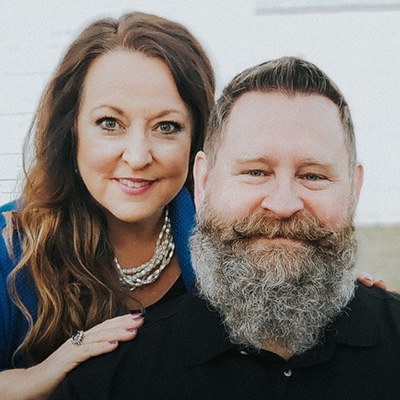
Jay and Tammy Daughtry
As a native of Rockford, Illinois, Jay has a pastoral background of over twenty years and a personal encounter with life-altering grief, having lost his first wife in an accident. His passion for hurting families comes authentically as he has walked many painful pathways of grief and loss. Jay was a widower and single father for over three years and now is remarried and raising a blended family of four children, three dogs and is a proud new grandfather. He is also a creative soul with a long history in songwriting and enjoying his craft of music through playing guitar, piano, drums and bass. Jay is certified to administer the Prepare/Enrich Assessment, a valuable tool for dating, pre-marital and marital work, and he is a member of the American Association for Marriage and Family Therapy.
As a native of Denver, Colorado, Tammy has a personal passion for children impacted by divorce and remarriage. She is the founder of Co-Parenting International, an organization launched in 2003 to help divorced parents raise healthy kids. She is a national author of “Co-parenting Works! Helping Your Children Thrive After Divorce” (HarperCollins 2011) and has extensive media experience with radio, television and professional seminars on the matter of co-parenting and its impact on children. Personally, Tammy is divorced and was a single mom for many years; she has been a co-parent raising a daughter “between two homes” since 2001. She remarried in 2009 and is now happily raising a blended family that is her pride and joy! She is deeply vested in the Nashville, TN area as she has lived there for over 17 years and is proud to call it home! Tammy is certified to administer the Prepare/Enrich Assessment, a valuable tool for pre-marital work and she is on the YMCA Board of Directors, the International Committee for the YMCA, the Program Director for the NAACC, a member of the American Association of Marriage and Family Therapists and volunteers for many local organizations that further community collaboration!
About the Host

Ron Deal
Ron Deal is Director of FamilyLife Blended®️ for FamilyLife®️ and President of Smart Stepfamilies™️. He is a family ministry consultant and conducts marriage and family seminars around the country; he specializes in marriage education and stepfamily enrichment. He is one of the most widely read authors on stepfamily living in the country.
Episode Transcript
FamilyLife Blended®
This content has been generated by an artificial intelligence language model. While we strive for accuracy and quality, please note that the information provided will most likely not be entirely error-free or up-to-date. We recommend independently verifying the content with the originally-released audio. This transcript is provided for your personal use and general information purposes only. References to conferences, resources, or other special promotions may be obsolete. We do not assume any responsibility or liability for the use or interpretation of this content.
Season 7, Episode 179: From Shock to Strength: Unplanned Pregnancy in a Blended Family
Guests:Jay and Tammy Daughtry
Air Date: December 15, 2025
Jay (00:00:01):
Many times, and this is a hard statistic, but about 50% of those who experience abortion, claim religious or faith background, and many of those are because as they’ve asked these young ladies and young men about that experience and “Why did you make this choice?” much of it is driven by the disappointment and anger of their parents and fear of what they might do or say.
Ron (00:00:41):
Welcome to the FamilyLife Blended podcast. I’m Ron Deal. We help blended families, and those who love them, pursue the relationships that matter most. And why do we do that you ask? Because we want to bring joy to the world. King Jesus certainly had a lot to do with bringing joy to the world, and we extend that to our home and to our world when we pursue that which is eternal, the things that matter most. That’s what we’re about here.
I’m so glad you’re with us on this journey. If you are relatively new to FamilyLife Blended, make sure you subscribe to this podcast however you choose to listen, whether that be audio through your phone app or on YouTube, you can watch the video version of that. And maybe sign up for our monthly newsletter on our new and improved website—new and improved; that’s right.
(00:01:31):
Have you been to FamilyLife.com/blended lately? You should. Like I said, it’s new and improved.
Hey, in 2026, Nan and I are going to be speaking in Connecticut, Southern California, Wisconsin, Michigan, Northern California, Georgia, and online Preparing to Blend premarital training for leaders. I’m going to be doing therapist training again, the National Marriage Week livestream, and of course our annual Blended and Blessed livestream. That’s going to be on Saturday, April 18th. You can put that on your calendar right now if you want to. Come see us, out and about, one of those events, we would love to meet you. Check the show notes and connect to our events calendar.
Jay and Tammy Daughtry are no strangers to the FamilyLife Blended podcast, and they have spoken multiple times at our Summit on Stepfamily Ministry. They specialize in co-parent education. Tammy authored the book Co-Parenting Works and created the video series One Heart Two Homes. They both are marriage and family therapists and run the Center for Modern Family Dynamics in Nashville. They came together and formed their blended family in 2009 after Jay’s first wife died in a car accident. Tammy’s first marriage ended in divorce. Their children are now adults and forming their own families, which brings us to our conversation. We’ll get to that in just a minute. Jay, Tammy, hey friends. Good to see you guys again. Thanks for being with me.
Jay:
Well, we’re glad to be here.
Tammy (00:03:02):
Thanks, Ron. Happy to be here.
Ron (00:03:03):
Yeah, it’s good to have you. Have you been to Ireland lately?
Jay (00:03:07):
Oh yeah, yeah.
Ron (00:03:07):
When was the last time you were there? Our audience doesn’t necessarily know, but you guys go to Ireland and teach and talk and spend time.
Jay:
We do.
Ron:
How many times have you done that?
Jay (00:03:17):
Well, we’ve been to Ireland four times now.
Ron (00:03:20):
Wow.
Jay (00:03:20):
And the first time was just purely pleasure. I had lost both my brothers over an 18-month period and just one of those moments where you say, “Oh, we got to stop thinking about someday.” And this beautiful woman voluntold me as she oftenly does. That’s a word, use it often, voluntold me. She voluntells me many things, but she just said, “Hey, we can’t wait for someday. You wanted to share this with your brothers and that would’ve been wonderful, but let’s go do this.” And so we shared it together and this beautiful lady who basically makes friends everywhere all the time.
Ron (00:04:03):
I’ve been around her; I’ve seen it in action.
Jay (00:04:05):
So we started making friends while we were there immediately. And now we have friends on both sides of the pond, so to speak, in England, in Manchester, Sheffield, down near London and Croydon. We have friends all over Ireland. And so with those connections we’ve been able to go back and actually do some teaching, me do some preaching, singing, lots of ministry opportunities, and we just thank God for opening that door to just share our lives for his kingdom.
Ron (00:04:36):
Tammy, what would you add to that?
Tammy (00:04:37):
Well, I was going to say and what Mr. Wonderful left out, and for anybody who’s not met us, my nickname for him is Mr. Wonderful. And if you ever get to hang out with him a few minutes, you’ll definitely think the same. But he’s also a songwriter. And so the second year, the catalyst to go back so quickly was a wonderful songwriting opportunity with a retreat of writers about an hour south of Dublin in a little town.
(00:05:01):
And anyway, we went back so that he could join with writers from I think seven or eight countries and just create music. And that has been amazing as far as meeting friends, friends that think and believe different than us and also who have some of the similar pain points we have. And so I feel like though we go and outside looking in, people might think we’re on vacation, but our hope and prayer is always wherever we go, whether it’s the Nashville Grocery store or Ireland, that the Lord just uses us as missionaries for him and for building those relationships.
And I’ll say this in 30 seconds, time me. Our most recent trip, we had a delightful surprise in that a dear friend of mine offered for us to stay with her father for about 10 days, but a gap of time between a production we did and a songwriting event. And we made a lifelong friend, and he is a gentleman who has wondered who God is, who lost his wife a year before we got there. And I know the Lord planted us in his home just to bring joy and to authentically let the two of them talk about their life experiences. And Jay reignited a love of playing the guitar. This man’s in his eighties and so we talk to him often and we have in a sense kind of unofficially adopted him and he is making important steps forward in who God is to him. And we’re praying and hoping that we’ll continue to be the voice for Christ in his life so that actually people ask me, what’s your favorite thing? I say, our new friend Martin.
Ron (00:06:48):
Well, I can see the joy in your face as you talk about that. What a neat thing, a reminder for all of us as believers that wherever we are, we’re meant to be a light. We’re meant to just engage people, to love on people no matter what that looks like, no matter what their background is. And you guys have obviously found a new family there. That’s pretty cool. Well, I’m glad I asked. I didn’t even realize there was that much to it, so that’s pretty cool. Thanks for sharing that with us.
I mentioned you guys got married in 2009. Kids are much older than they were at that point in time. Bring us up to speed. Bring our listeners and viewers up to speed with your family as it is now. Who are they? How are they? Who’s married? Who’s got kids? Just give us the snapshot.
Jay (00:07:35):
When we came into the marriage, I had three and they were all the older ones. And then her daughter was the youngest, Angelia. And so right now our oldest daughter, Amanda, is 37, living in the Nashville area and just doing life. Our second oldest daughter, Jenna is 32, and she is the one who has blessed us and we’ll be talking about that soon with many kiddos. She’s married to an amazing son in love called Shelby, and our son Jaren is currently out in Denver doing life and finding his way. He’s 27 now and yeah. And then Angelia is 25, been married, what, three or four years?
Tammy (00:08:22):
It will be four years in December.
Jay (00:08:23):
Yeah, it will be four years in December to a lovely young man named Jackson who we were privileged just a week ago to go and see his ordination. And he’s finishing up seminary here in the spring.
Tammy (00:08:37):
Yeah, next May.
Jay (00:08:39):
Yeah. So they are serving in a church there and just doing life. So they’re here, there and everywhere, and it’s a blessing to see how God is moving, keeping and caring for them. Two of them are not really walking in fellowship with God and so we pray for that continually. And we understand that all of us as parents are in that space, especially as parents of faith who know what our children need even when they don’t. And so never forget to lean into those spaces and to recognize that as much as we ache for our children, God aches for them even more. And at times He will use the heavy hands of circumstance to bring them back into your life when they’ve been separated. And that’s okay. And if you will stay in a posture, a parental posture that allows you to receive them without counting all of the challenges that have come with their straying and their choices, then God is going to use that in a powerful way. He has done that and continues to do that, and there’s still a journey ahead for two of them. But yeah, I just don’t want anybody to lose hope because sometimes it gets a little scary.
Ron (00:10:02):
Yeah. I appreciate you sharing that. We used to think, all of us, I think when our kids were really young, how exhausting it is to care for young children, chasing them all over the place, especially if you have two or three or four or five or whatever. That has its own level of exhaustion, a physical exhaustion. The emotional exhaustion when they’re adults, and you again realize how powerless you are, and yet you retain influence. It’s just such a difficult, weird place to walk in relationship to our kids and when they make decisions that you just kind of go, “Ah, I’m cringing for your benefit, and I wish things would be better,” and “Wow, it’s tough.” And so we join you in prayer for all of them, especially the ones that are on your heart in that way regarding their faith. How many grandkids you guys got at this point?
Tammy (00:10:54):
Can I tell that part?
Jay (00:10:55):
You can tell that.
Tammy (00:10:57):
Yes. So he’s Mr. Wonderful and Pops or Papa. I’m Grammy Tammy to six little bits. There are three girls and three boys, and they are literally every two years, almost like clockwork. And two of the girls are literally born on the same birthday, two years apart. So Jen and Shelby have just developed a wonderful, amazing family, and I think after number two they said they were done and then these babies keep coming, so we are delighted.
Ron (00:11:30):
Funny how that works.
Jay:
You’re right, yeah.
Tammy (00:11:32):
Absolutely delighted that that is the case. And they are precious and the first grandson, he’s now in middle school and he’s playing football and playing the tuba, just it’s delightful what a little man he has turned into. And then they’re all just, they’re wonderful and so unique in their personalities and their interests, and so yes, there are six of them and we adore and love them.
Ron (00:12:03):
At least one of those was what you might call an unplanned pregnancy.
Tammy:
Yes.
Ron:
In talking about that, I heard you guys talk, you called that day one, a day one experience. Tell us what you meant by that.
Jay (00:12:17):
Well, yeah, what we mean by that is, and this is always so interesting to think about this even now, 25 years as a pastor, before I went into doing counseling and things and working with youth and working with families and all the things that I’d done over the years, and never once did it really enter my mind that this was a possibility. We’d lend our family. We’ve got three girls, one boy, and never had a conversation about what if. And so that day one is kind of a shock. And for me, I came home one evening and the oldest daughter Amanda was in, and I thought, “Oh, well, that’s nice. She’s visiting, that’s cool.” And at some point, she comes and gets me from my room and asks me to come down the hall to Jenna’s room. And I’m like, “Oh, okay. Yeah, what’s going on guys?” And they proceed to tell me Jenna’s pregnant. And I’m like, “Oh.” And I was just so unprepared. I didn’t know what to do. I didn’t know what to think. Of course, as a father, you’re thinking of all the possibilities, all the challenges, everything that’s coming up. And so that moment for me ended up being very somber.
(00:13:44):
And it’s not that we don’t want to recognize the weight of the situation, but to bring in a spirit of a joy in recognizing how God is about to expand your tent, so to speak, and to bring something amazing into your life. So part of what I think about, and part of what we wanted to start to help other people think through is, what can your day one be like? Now, Tammy, I’m going to let her talk because her day one is very different, and this is part of the reason why we decided we needed to help folks talk through, think through and pray through the idea of being an unplanned grandparent and what that day one looks like can change the entire trajectory and the atmosphere around all of it.
Tammy (00:14:38):
Yeah. Well, that night I was in Atlanta. A dear friend had just lost her husband. I was there comforting her and stayed with a new friend who is the children’s pastor still at a mega church in Atlanta. She opened her home to me to come, and my friend Kevin had passed and haven’t talked about him in a while, but I was just simply transferring pictures off of my laptop to a hard drive for the celebration of life the next week. And I spent about 20, just shy of 24 hours with this gal, and she had a high school daughter and a beautiful granddaughter, and I just was in their kitchen, in their living room, observing while I was dumping files over talking a bit. And I remember that day I was just thinking, “Wow, someday I can’t wait to be a grandma. That could be amazing.” And so I drove home late the night they had talked to him. I didn’t know about that. And got in probably at one or two in the morning, went to bed, got up the next morning and sitting on the couch with my, now this is an important detail, Ron, my polka dotted pajama pants. Those are always part of my story.
Jay (00:15:56):
And coffee in hand?
Tammy (00:15:57):
Yes, good warm coffee in hand. Jenna and I were sitting on the couch and the TV was on, and I was about to show Jenna this beautiful new friend I have. That’s back when Instagram was kind of new, and I was trying to decide if I was even going to have an account, but I turned to Jenna to show her this picture of my new friend and her granddaughter, and Jay turned the TV off and I said, “What’s wrong?” And he said, “Well, Jenna needs to talk to you.” So I set my cell down and I turned to her and I said, “What’s wrong sweetheart?” And she said, “I’m pregnant,” and my soul just exploded with joy. I was so excited. And I hugged her and I was like, “Oh my goodness, I’m going to be a grandma.” Jay was standing there crying and kind of in shock because everybody thought stepmom Tammy was going to be upset. I’m also good at getting upset, but I just was elated to know that was coming. And so I was hugging her kind of bouncing, he says like Tigger and—
Jay (00:17:04):
Oh yeah, she came off that couch like Tigger with springs in her feet, in her tail, and up and down, grabbed Jenna, hugged her close, was crying tears of joy. Jenna was crying and confused like me, because we’re both going, “Didn’t expect this.” That’s what we’re thinking inside. And Jenna, what did she say?
Tammy (00:17:26):
I was hugging her and I leaned back and she’s like, “I thought you were going to be mad.” I said, “Oh, sweetheart,” I said, “I was an unplanned pregnancy myself. I’m glad they kept me. We’re going to figure this out.” And I went back to bouncing and hugging and excited. And then I did lean out one more time and say, “Now, I didn’t know you had a boyfriend, but we’re going to get back to that.”
(00:17:47):
“Oh my goodness, I’m going to be a grandma.” And that was my moment one of my day one, and I can only give God the complete credit for how he set me up because I think had I not been in this woman’s home observing her high school daughter who had a daughter, and that joy being flooded in my concept of someday, I probably would’ve reacted much more from a pragmatic. I like to plan things out and know how they’re going to work, and I probably would’ve had a little more of a shock on my face, maybe a tone of voice that was harsher or crisp and been a little confused, like, “Oh, what?” That would be a very common response for many people in that moment. And I’m just grateful. And that to me marked all of it because I knew if the Lord would take me through Atlanta, Georgia to love on my friend Janna, as she lost her sweet husband, who is like a brother to me, and our whole ministry wouldn’t exist without Kevin and Janna to then prepare me for that first moment. I thought, “If God can do all that, then we’re okay. He’s in the details and He’s going to work out this story.” So yes, that was my day one in the polka dotted pajama pants.
Ron (00:19:20):
I appreciate you guys sharing both versions of your day one experience. I’m imagining somebody listening right now who is either trying to put themselves in your shoes going, whoa, what would I do if one of our kids came in unmarried and pregnant.
(00:19:34):
And other people listening, watching, going, “Yep, been there and done that. And that was not my reaction. My reaction was something totally different than that.” I imagine you guys have had some conversations, we’re going to get to it. I know you’ve built a resource around this now, but in just kind of walking this territory, I know you’ve had conversations with other people. Do you find that the reaction runs the gamut from the, maybe one extreme is the practicalities of you can’t afford this and you’re not married, and let’s talk about sin all the way to the other side of just the emotional experience of the joy of I’m going to be a grandparent and this is a beautiful thing, and does it just run the gamut?
Jay (00:20:26):
Yeah, I think so. I mean, as we’ve talked with folks and heard their stories, unfortunately, it seems to lean very heavily toward the pragmatic side, and unfortunately, we have a tendency to turn those into moments of shame. I guess there’s no other way to say that. That’s a heavy word, but it’s true. You never have a chance to take those words back. I mean you can; it takes time and it makes it harder. But so often, yeah, it leans on that side of pragmatism and oh, here’s all the things that we have to worry about. Now here’s all the heaviness of this situation and having a lighter spirit and joy doesn’t change those things. There’s still going to be challenges and there’s going to be logistics and there’s going to be financial things. But for that young man or that young woman in that moment to know that you’re on their side and that we can get through this, we’re not pushing you away.
(00:21:38):
And unfortunately, that’s the way some of these things happen. Many times, and this is a hard statistic, but about 50% of those who experience abortion, claim religious or faith background, and many of those are because as they’ve asked these young ladies and young men about that experience and “Why did you make this choice?” much of it is driven by the disappointment and anger of their parents and fear of what they might do or say. And I think for us as Christians and people of faith, we really need to turn that a bit and we really need to lean into that grace that God gives us in those moments.
Now, on the other side of it, there’s these amazing times. One of the stories we’ll share is a fellow who started on that path and he’s an internal person, and so it was all inside of him, and he was going through all the pragmatic stuff, and he was going for scriptures, and he was ready to lay down the law. And something as he was coming down the stairs ready to have this big conversation, the spirit of God grabbed his heart and said, listen, I know you want to protect your daughter, but right now you have an opportunity to protect your future grandchild.
(00:23:09):
Don’t lose that opportunity. And that stuck with me so deeply, and that’s when we really started thinking, we need a resource. We need to share this with folks so that before they have their day one, they’ve maybe prayed it through, thought it through, have an idea of how they want to respond, and if they had a bad day one, we talk about that too and how to redress, to go back through that process and go, “Okay, let’s regroup, gather ourselves and do this differently.”
Ron (00:23:43):
Yeah. How old is that child now?
Tammy (00:23:46):
He is 11.
Jay (00:23:47):
He’s 11.
Ron (00:23:48):
Okay, so you’ve had a lot of time to reflect and look back on day one. I’m curious, what kind of insights have you had about it and the days that followed? Things that, wow, I would’ve done that exactly the same. Here’s something I may have done a little bit different or maybe just realizations about the whole process.
Tammy (00:24:09):
Well, I can say one of my first desires, and so was Jay’s, was to meet Jenna’s friend. And we hadn’t met him. He wasn’t somebody that was familiar in our life yet. And so we actually ended up inviting him to lunch with Angelia, and I think Jaron and I think everybody came to meet him and to say, “Hey, welcome to the Daughtry family.” Because part of, I think that that initial moment before I say any more about that is I want to just say that I hope every parent listening will think, “What can I do to wrap my arms around my son or daughter to let them know I am with you. I’m not against you, and I will walk with you. You’re not alone.” And I think in those first moments, they get marked sometimes with the pragmatic reaction to the young person can feel like, “Oh no, I’m in trouble. I’ve done something wrong. They’re not with me. They’re not going to support this.” Or the old phrase, you made your bed go lie in it. Some kids get kicked out of the house if they’re found to be in this circumstance. And I just say to parents, wow, if there’s ever a time to lean in and stay close to your young kids, your young adults, it’s now. Because if they begin to wander away and feel a sense of rejection and judgment from us, then that’s going to translate to their experience with God.
(00:25:45):
If my parents are upset, and especially if they’re Christian parents and then God’s upset, and then it just creates this negative internal process that can be so hidden in why they ultimately might pull away or even consider ending that life. And so I just, that day one, like Jay said, sometimes, and I think men and women respond differently, the waffle and spaghetti analogy where ladies are a big pile of spaghetti and lots of emotions and they touch and connect and guys are more pragmatic with their waffles and boxes. And sometimes I think that’s a beautiful design, and I wish I had more waffle part of me, but going back to those moments, if there was a pragmatic response for a dad, I think one of the things Jay has always said he hasn’t said yet was he wishes he just would’ve walked up immediately and just wrapped his arm, his big bear hug around her and held her, right. That would’ve said everything. And he did eventually. I mean, it wasn’t what, maybe 10 minutes or something, five, 10 minutes of standing there at the door asking some questions, talking calmly. But his first thing in reflecting is, “Man, I should have just walked over and held onto her.”
(00:27:04):
She would know, and she would never doubt her daddy. I mean, Jenna knew we’d be with her, I believe. So the physical hugs, repairing the words, if harsh things got said, going back quickly to, I really want to revisit that, but in looking forward to some of the next steps was we wanted to meet Shelby and we wanted him to know that, hey, we are with you as well. And here I am, the co-parenting person. And one of the things we told him upfront was, “We are not going to force you to marry our daughter.” The three of us went to lunch without Jenna, just Jay and I and Shelby getting to know him and just wanting him to know you’re welcome in our home, and regardless of what happens with your relationship with her, you’re part of our family and you’re always going to be this baby’s daddy. And we wanted him to know that we valued him, that he was important and we were not going to reject him.
Jay (00:28:01):
And part of what you were asking there, Ron, I wanted to elaborate on in the resource, I took the word redress and made an acronym out of it and started praying through, “Okay, Lord, how can I use this as a tool so that people can see it, look at it and walk through it?” But the number one thing, and this is just God bringing each of the right word and thinking the right things that ours about relationship, one of the things we understand, especially as counselors and as parents if we’ve done some emotional intelligence work for ourselves, is we always talk about connection before correction. And that never changes saying, this is something parents need to realize whether that child is 16 or 26, the first thing they need from you is a sense of they’re not alone, you still love them, you need to connect. And just as Sammy said that getting in there and giving that hug and holding them and letting them know, “Hey, that’s the beginning of doing it differently. And if you had a bad day one, right, then”—
Ron (00:29:14):
You can repair with day two.
Jay (00:29:15):
Yeah, you regroup, you repair, and you start there.
Ron (00:29:18):
I think you’re right on with that because in the absence of affirmation, in a very stressful time, put yourself in the shoes of this child saying, “I’m pregnant. What are my parents going to say about this? How do they feel about me?” In the absence of anything direct to tell them that a relationship is intact, “We still love you, we’re here.” People make up a story and so oftentimes that story is a negative story and they try to put it together. And what they come up with is they’re ashamed of me. I’m a disappointment. Fill in the gaps there. So the connect before you correct thing is so critical to get that first message out there so that you actually have the ability to deal with the realities and the concerns that you have on the backend. I guess it’s a timing thing, is that what we’re saying?
Jay (00:30:17):
Yeah, I think so. Timing is really, really important because if you have a tendency to be reactive, knowing that ahead of time is great.
Ron (00:30:31):
It is good to know that about yourself, yes.
Jay (00:30:33):
But if in that moment that gets away from you slowing yourself down, going back, thinking things through, settling yourself in, and just being very, very intentional—
(00:30:46):
—about all those things you said, bringing us back into that moment, right, and literally planning it with each other and planning a time and having that moment and then sitting down with them, not across the room or across the table, but next to them on a couch and saying honestly to them, “Hey, I didn’t react well to this. I know that. I know that. And yes, we’re worried about your future, but you know what? More than anything, we love you and we don’t only want to just protect your future, we want to protect the future of our grandchild. And so we’re going to be able to do this together. We love you completely. Last thing I want is for the guilt of this moment to turn to shame, because we don’t want you to carry that toxicity forward. It’s not good for you. It’s not good for our grandchild. And so here I am in humility, wanting you to know that whatever this is, you are first and foremost our daughter or our son.”
Ron (00:31:59):
That’s good.
Jay (00:32:00):
“And we love you, and we are not leaving you alone in this. We will be walking with you every step of the way.”
Ron (00:32:09):
Let me ask you another question. I asked the, looking back, it just occurred to me, if your daughter were here, and I was talking to her and I said, so what was that like for you looking back, their reaction, their responses in the beginning and then over time, what did that mean to you and how did that nurture your relationship with them, but also your child’s relationship with them? What do you think she would say?
Tammy (00:32:39):
Well, that’s actually part of what we asked her on the Unplanned Grandparent Project. And she and Shelby share their story. And I think in a nutshell, she would say that she felt loved and supported, that she felt like we were with her. Part of the—it was disclosed to us in the summer when she was in college. And so there were questions about what’s next with college. And so we were very supportive of figuring out how to keep that pathway open and as successful as possible for her. And so some of the practical things we probably had a month or six weeks before, we had to really think through some of those things as far as does she move back in the dorms in the fall? So we let her know we’re with you as we figure out what’s next. But I believe and think she would probably say one of her greatest things she appreciates is we wanted to know Shelby. We welcomed him in, we wrapped our arms around him, and he’s a big six-foot three black man from Memphis who had never seen white people and black people get along. And he would tell you that. He speaks of that openly when he shares our family story. And so there was an initial probably on his side, this initial concept like, oh, these people are nice, but he would say, they’re just putting up with me because I got their daughter pregnant. And eventually he would tell you that he realized, no, they really do see me and I’m important and they love me.
(00:34:21):
And so I think probably our response to him was very significant in whether she felt like we were all going to be able to stay close and support the process. Had we been very rejecting or cold or harsh about him, I am a hundred percent sure that would’ve drawn her closer to him and away from us. And maybe who knows the things that could have been different, that would’ve been hard in that journey. But no, I think she would say that that response of how we were interested in caring and loving towards Shelby was really an important piece of the puzzle.
Jay (00:35:06):
And I would say, I believe Jenna would say this, no doubt that all of the fear, because I don’t know how long it was before she spoke to me, and then of course the next day Mama T. But I can imagine from the time she found out until those moments, there was this building up. As we know, when you’re faced with the unknown, you are going to think all the worst-case scenarios. You’re going to imagine all the worst things happening, and the enemy is going to come in and he’s going to rev up that fear engine, that fear engine’s going to be spitting out anxiety in 15 different directions. And so I think that moment that God gave us that grace moment that he put us into on that Saturday morning, I think Jenna would look back at that and say, number one thing happened, it destroyed the fear. It absolutely eliminated the fear. It got rid of all the anxiety, and that allowed her to rest in that moment, to feel at peace and then think about the future and the challenges that would be there without thinking about it as doom and gloom or trouble in distress. It just changed everything for her.
Ron (00:36:40):
Guys, I feel the need for us to just wrestle with a question. I can imagine somebody listening or watching right now is asking themselves, but Jay, if you don’t show your disappointment, if you don’t express the reality of this poor decision and the sin and now the outcome, she might not change, she might not grow. It might feel like permission. She might go on and do other things in life. She might not repent in a way that’s meaningful for her future. So you got to come down hard.
Jay (00:37:21):
I could understand that being an initial reaction. And what I would say to a person who’s thinking that way is to recognize part of what Tammy alluded to a moment ago is if you bring that shame to her, she already knows all that, right? She’s raised in the church, she was doing children’s ministry, worship ministry, she knew all of that, and that was what was firing up that fear machine in her heart and soul. That was what was bringing her to that moment. And I had the opportunity to either let that guilt turn into shame and become toxic or to let that guilt rest where it needed to be so that she could think those things through. Because if we come in too hard, then that daughter or that son is going to feel rejected. They already know the mistakes they’ve made. There’s no question about that. They know that. Now, can we reiterate those at some point? Certainly.
Ron (00:38:23):
Yeah, revisit.
Jay (00:38:24):
This goes back to the idea of having that connection first, giving it time. Talk about some of the natural logistics. Oh, well there’s college. Let’s make sure we get, oh, and we’ve got this guy we need to meet and let’s figure out who he is. And hey, your parents are America’s co-parenting strategists. We’ve got that down. So first, let’s figure out if you guys are supposed to be together because you don’t even know that yet. So you look at those logistical things, and you let those things move forward. And then depending on the child, this is what’s important. It’s not about what I think or what I want. I don’t want to put myself and insert myself in this in such a way that overwhelms or overshadows the real issue. The real issue for her was for her to reflect, for her to think those things through and for her to come to a realization of, wow, I need to make some changes. And for us to be there with her. Now, if she had responded in such a way that she just sort of wanted to throw off this responsibility and she was just totally ignoring things, well then that’s a different situation. We have to lean in a little bit and say, Hey, look, we want you to learn from this mistake. There are things here that you need to address in your own heart and life.
Ron (00:39:59):
And you do have nine months to get there. It’s so much about the timing of this. I so appreciate what you’re saying as you’re talking. I’m just thinking, yeah, John 4, a woman at the well, Jesus treated her as if she was worthy, even though we might describe her as not. John 8, woman caught in adultery. He doesn’t cast the first stone, although he could have. And he basically makes other people decide whether they’re going to do that. I desire mercy not sacrifice.
(00:40:27):
That those Jesus words keep coming back. It’s so difficult because I know that part of that thing in our heads that says, you got to come down hard. You got to, wow. That’s often our own pain talking, I feel bad. I feel a little bit guilty. Did I not do enough as a parent, blah, blah, blah. You’ve messed up. I don’t want your future to be horrible. We kind of think now it’s all within my control to come down hard on this child and that will ensure that this child never ever does this again. And yeah, that’s just your pain talking, and none of that is balanced, and none of that really communicates the care concern and love that you have. And love is a thing, that connection before your correction. Connection is what’s going to give you the leverage to say things that are correcting, to speak into their life and their character—
Jay (00:41:24):
Yeah.
Ron (00:41:24):
—growth forward. Without the connection you lose at leverage, right?
Tammy:
Yes, absolutely.
Jay (00:41:27):
Right, and to your point, those scriptures, what’s beautiful about those interactions that Christ has is that He shows love, He shows compassion, He offers truth without shaming and then says, okay, so here’s where we’re at. You know what you should be doing and how you should be living so go and sin no more. Just go and do it differently now. And it was a surprise to us, but it wasn’t a surprise to God. You always have to lean back into, Hey, God is sovereign and God’s in control. God allowed this, right? We always look, we need to look past this young man and this young woman and say, okay, God allowed this. Am I okay with living within the sovereign will of God that tells me God was not surprised?
(00:42:26):
And can I then recognize his promises that all things will work together for the good, and that what the enemy meant for evil, which he certainly did. He wanted to destroy Jenna’s future. He wanted to destroy Shelby’s future. He wanted to put a rift in our family, but what the enemy meant for evil, God is going to turn it for good. That is his promise. He’s going to give us that hope and a future that He promised through Jeremiah. And we as parents have to lean into that because in that moment, our children are so fearful and so overwhelmed, they can’t see those things, and we have to be the voice of Christ in that space and offer all of those promises and compassion.
Ron (00:43:12):
It sounds like your movement toward your future son-in-law was the same thing. You were connecting in order to be able to have influence—
Tammy (00:43:21):
Yes.
Ron (00:43:22):
—and lead. Had you been harsh, judgmental, distant, that would’ve sabotaged your ability to lead, I would think.
Tammy (00:43:31):
Yes, definitely. And I mean, it’s like all of us have a way to read people, whether it’s in a new work environment or on an airplane you sit down next to somebody, you can read their body language, right, if they want to connect or not. I’m kind of quiet and shy on the plane, so I struggle with that, but—
Jay:
—a liar.
Tammy:
I know. I collect people everywhere I go. But yes, I don’t know. For us, I guess it was fairly natural to want to know Shelby. And here’s the other piece when we look at the bigger picture. I mean, we didn’t know initially what Shelby’s reaction was going to be to this and what his role was going to be and if he wanted to be involved or not. We didn’t know any of that on our day one. And one of the things when we zoom out and look at a bigger picture of what women go through when they are pregnant—if they are rejected by their partner, if the partner says, “Hey, I don’t want anything to do with this. I don’t want anything to do with you,” and they break up and end that relationship, that’s a real thing that happens. Millions of women experience that, and that can become such a traumatic loss and rejection that it perpetuates other pain points in the future. And so I think for Christian parents or any parents, and this expands out to aunts, uncles, grandparents, youth pastors coming alongside a young lady when she is pregnant in an unplanned scenario, is not condoning the sin.
(00:45:19):
It’s loving the creation that God has made in her being the person who has been blessed with a creation inside her. And we want her to choose life for that child. In our project, we talk about lots of other options. Not all young people are ready to be parents, so maybe the grandparents raise a child, or maybe there’s adoption as a loving option. There’s lots of options, but we want that young lady to bring that baby to full fruition.
(00:45:52):
Because medically, her body will respond beautifully to how God designed the body. And there are some very harsh, painful things that I’ve learned from being around the pro-life movement that happen with a body when it’s abruptly ended before its natural process. And so a young lady is at risk for emotional rejection from her partner. If she decides to end the life, she will carry that with her forever. In a way she cannot at all understand now, it’s like a permanent “solution” to a temporary challenge. If she can’t see her way forward in, where will I live? How will I support this baby? Will I have enough money to buy food and diapers? I mean the basics. If that young lady is in distress about that and either—and, maybe her well-meaning parents say, “Well, you made this bed, go lie in it. You got to go get your own place. You got to pay your own bills. We’re not going to enable this sin pattern.” well then that sets her up to look for love and support in places that might not be healthy, from people who might not be well equipped to point her to a godly future. And I love—there’s a ministry out now called Embrace Grace, where they are putting small groups for young ladies in the church all around the world and intentionally welcoming young pregnant ladies to have a small group in church that is designed for them.
(00:47:36):
And it is redeeming the question of, does God still love me if I had an unplanned pregnancy, right? Because if their partner rejects them, which so many times happens, and even if they don’t, there is still this big question mark: what does God think of this? Is the sin going to be louder in their head than salvation, and the Spirit of God, and recognizing this baby is a gift from God that they can raise? And when the church does a great, beautiful job of welcoming in hurting people of any type of hurt, then especially with a pregnant lady or her partner, you don’t just capture them, you capture the next generation, right? Those little ones grow up in church and they learn about Jesus. And even if it’s just a single mom who doesn’t have a healthy partner walking alongside her, if we keep our doors open and our arms wide and loving towards her, she could be the next godly woman who is raising 2, 3, 4 kids in a healthy marriage someday that’s a blended family. The never married scenario with real people in our world turns into sometimes a blended family and it comes a different direction than post-divorce.
Jay (00:48:58):
I just wanted to point out too, quite often this is a very female focused issue, and quite often we lose track of the young men who are part of this. And one of the things I want to speak to is to recognize that if we cannot target them because that’s part of what we do as parents on both sides of that issue, right. So we’re upset, all those questions you said, we feel guilty, we feel bad, we feel upset, we’re overwhelmed. And so we immediately look to the other person. If it’s my daughter, I’m looking at this guy, “Oh, this guy.” If it’s my son, I’m looking at, “Oh, that hussy.” We get these attitudes because we start targeting outside of ourselves because we don’t want to put that energy toward our child. And that can be destructive. It’s not helpful. It doesn’t do anything except drive a wedge possibly between you and your own child, to attack that other person.
(00:50:08):
But this especially happens with guys more than not. And what that does then is put them in a space where they feel like they’re not wanted. And so rather than giving them the chance to understand that there’s a way forward, we immediately throw all these expectations on top of them, and then we throw all of these epitaphs at them—that they’re this and they’re this, and they’re this, and they’re this, and how could you be that and blah, blah, blah. And so immediately there’s just big walls, big walls and buffers and pushback. And that’s exactly what Shelby was expecting. Our very first time meeting him was at a Dairy Queen in Donaldson, and it was just me and Mama T before the big coffee time when he met everybody in the family. And I immediately noticed when we walked in and he’s sitting at a chair at a table, and I could see his posture, his posture, his face, he was ready to be attacked. He was definitely planning on being attacked for all kinds of different reasons, cultural reasons, just in general understanding what this typically the way it’s handled. And so it really caught him off guard when we spoke to him as an adult, when we offered him compassion and kindness and when we treated him as a human being—
Tammy:
—with respect.
Jay:
—and we didn’t target him. And that was the beginning of him recognizing, “Oh, wait a minute. This isn’t what I thought it was going to be. Maybe there is a road forward out of this.” And last thing I’ll say is when we look at young men and women choosing life, the number one thing on the list that helps them make that choice is the heartbeat and the sonogram. That’s been a powerful, powerful tool. But the number two thing on the list is a way forward, is a future to be imagined, and that’s essentially co-parenting help. If they know that, okay, we can move forward, and that doesn’t demand that we do this, this, and this and this, but we give ourselves space and time to recognize what this should be, to seek God, to seek ourselves, to understand, “Okay, was I meant to be with this person or not, but either way, I am now a parent. I am now involved.” So when they know that there’s a way forward that doesn’t demand that they throw everything out the window and be only this in the way that culture says you have to be, then they can relax and go, “Okay, I’m not going to run away.”
Ron (00:53:00):
I can see it.
Jay (00:53:02):
Yeah.
Tammy:
Yeah.
Ron (00:53:15):
I got to come back to something as we’re about to wrap up. Tammy, you said earlier that you were the result of an unplanned pregnancy.
Tammy (00:53:24):
Yes.
Ron (00:53:25):
How has this whole experience, is it a full circle experience for you? Has it added some perspective to your own personal journey?
Tammy (00:53:33):
Oh, yes, absolutely. And honestly, when I said that to Jenna, I don’t think I’d ever said that out loud like that to anybody. I mean, when we were dating, I think I told him my whole life story, which probably that puzzle piece was part of it.
(00:53:51):
But my parents were high school sweethearts. They loved each other. Dad was a year younger than Mom. Mom had graduated from high school as valedictorian. She was off to her freshman year of college. And so I’ve known, and as you grow up, you hear different puzzle pieces of those, what was probably day one through 10 with them as everybody in the families found out and in the little town that they lived in, which everyone knew everyone. And so I think looking back on that, one thing I know because they were sat down by my grandparents. All four grandparents sat at one table, and my mom and dad were on the couch, not involved in the conversation, and they planned a wedding for them three weeks later—where it was going to be, who’s going to bring what food, so they organized quickly. And in my parents’ case, they had been dating and everybody knew everybody, but there was a wedding.
(00:54:54):
And then before I was one, they were actually moving towards divorce. And there was a lot of complications to why that was the path. But the thing that I look back and wish, at least from what I’ve been told is that the question and the experience of being loved unconditionally by parents who are Christians, and yet this doesn’t fit in the Christian box in the timeframe that we expected or the way we imagined, I wish my mom could have had probably some more support. And I wish in that little town there would’ve been a beautiful pregnancy center for her and my grandma to go to, for my dad and his parents to go to, and for dad to maybe go to some parenting classes and just some more tools and support for this 17 and 18-year-old duo who were now becoming parents. And I don’t know if those resources had been in place, what would’ve happened in their story. And certainly I don’t believe there was ever a question if I would be brought into the world. I don’t think back then that was even an option. But what I wish there could have been, and as we’ve worked on the Unplanned Grandparent project, I have imagined all of my own grandparents and wondering, and some of the information I know and some I don’t. And I’ve asked a few questions along the way of my own parents to learn more.
(00:56:48):
And I just know that they all needed some tools and some guidance that didn’t exist back then. And so yes, they’re both still alive, and I’m so grateful that my parents are part of my life and have been alongside all of my years. And I miss those grandparents dearly, and I hope from heaven they will—if they know what we’re doing down here, I hope they’ll be excited to know what we’re doing. Because the whole point is to cheer for these beautiful gifts and to just help folks find the healthiest way forward.
Ron (00:57:26):
To that end, you’ve created a resource. Tell us a little bit about it.
Jay (00:57:32):
Well, it’s called Unplanned Grandparenting. And we wanted to be sure, because again, we never talked about it, we never thought about it, we didn’t prepare for the possibility of it. Not that it’s an eventuality, but it was certainly a possibility when you have four kids and three of them are females, right? It’s a possibility. And so we realized, well, God blessed us with that grace moment on our day one, day one and a half, let’s say, because my half wasn’t great, and then it was completely overshadowed by this beautiful grace moment. And so we started thinking, how can we help others think about this, plan for this, be encouraged to recognize because there’s a ton of resources for these young men and women, especially the young women at these pregnancy centers and at churches and things when they’re in this space. But there’s nothing there speaking to the parents and what those parents need just as much as that young man or young woman needs, some love, some compassion, and some help squashing the fear that comes.
Jay (00:58:47):
And the overwhelm that comes with that. We wanted them to hear other voices. We wanted them to hear strategies and have tools to say, “Okay, either our day one was great or our day wasn’t. Okay, well let’s redress that. What about the future? What does that look like?” And so we have Jenna and Shelby speaking. We have, I don’t know, probably 10 other voices, at least—
Tammy:
About 12 other voices.
Jay:
—telling their story and helping folks see that there’s a way forward
Ron (00:59:18):
That’s good.
Jay (00:59:19):
And yes, it can be overwhelming, but if we slow down and we let God enter in, and if we start cultivating the grace that He offers us in those moments, every moment moving forward, just letting Him bless those moments and if we intentionally take hold of some of the tools that we talk about in giving us direction on how to approach this and how to think it through. And our hope is of course, that as people are in this space, that they find the resource. But our other hope is that they find this resource before that day one ever comes so that they’re fully prepared, they thought it through, they have plans and more importantly, their spirit and their emotional self is in a space that when or if, whatever that looks like, they can show up with God’s grace flowing out, with recognizing that all of those fruit of the Spirit that we’re called to and should embody and express. We not only want it for our children, but we need to have it for ourselves. And when we recognize that, when we start thinking about the possibility of something like this, and we put it in this perspective of what does it look like for the fruit of the Spirit to show up in this moment?—that gentleness, that kindness, that self-control, and above all that love.
Ron (01:00:51):
So important for individual family units. You could also go through it and be thinking about how you can help somebody in your church or your community, just that whole community aspect of it. So very important.
Jay, Tammy, again, thank you so much for being with me today and I appreciate yet another great contribution to the family ministry world. Thank you.
Jay:
Thanks Ron.
Tammy (01:01:14):
Well, thank you for having us, for just everything this ministry does to bring these topics to life. You’re amazing.
Ron (01:01:21):
God bless guys. Thanks for being with us today.
Tammy (01:01:23):
God bless you.
Ron (01:01:25):
Well, to viewers and listeners, if you want to learn more about this project and other things that Jay and Tammy are up to, go to the show notes, we’ll get you connected.
Yeah, it’s December, so I kind of think it goes without saying, but the first Christmas was the result of an untimely pregnancy. The Savior was born in less than stellar social circumstances, surrounded, I can imagine, by lots of gossip and chatter, and yet peace has come to the world. God can work with any family situation to bring about a blessing, to bring about hope. He’s not wanting you to get it all right before He’ll use you or touch you or embrace you. If anything, He’s just waiting for us to, again, humbly bow before him. Do that, and he will rush to your side with grace. That’s what He promises over and over and over.
(01:02:22):
Why? Because He loves you.
We are a donor supported ministry. And if you’re only going to give one time a year, this is it because FamilyLife has a generous donor who will match your gift. $25 becomes 50, a hundred becomes 200, but you got to do it in December. Please consider making a year-end donation. Again, the show notes will tell you how.
Do you need a Christmas miracle? Hang on, because next time blended family coaches, Mike and Kim Anderson are back to talk about maintaining your best self in your worst moments. That’s next time on FamilyLife Blended.
Merry Christmas everyone. I’m Ron Deal. Thanks for listening or watching. And thank you to our production team and donors who make this podcast possible.
FamilyLife Blended is part of the FamilyLife Podcast Network. Helping you pursue the relationships that matter most.
We are so happy to provide these transcripts to you. However, there is a cost to produce them for our website. If you’ve benefited from the broadcast transcripts, would you consider donating today to help defray the costs?
Copyright © 2025 FamilyLife. All rights reserved.
www.FamilyLife.com